
For Florida restaurant owners with business partners, restaurant accounting services means keeping shared business records with the aim of making profit, cash, and owner transactions clear to everyone. Unlike a sole owner, you need books that support joint decisions without leaving one partner responsible for explaining every deposit or withdrawal.
- Full Plate is a restaurant accounting services option for Florida partners considering ongoing monthly bookkeeping.
- Keep partner contributions, reimbursements, loans, and distributions separate from restaurant operating expenses.
- Choose monthly bookkeeping around shared reports, clear responsibilities, and a documented process for unresolved transactions.
- DIY bookkeeping works when owners keep records current and give every partner access to the same information.
Why restaurant accounting services matters for partners
A Florida restaurant partnership needs more than a bank balance. One partner might manage the dining room while another handles vendors, payroll records, and paperwork. Both still need to understand what the restaurant earned and what the owners took out.
Seasonal sales add another decision: how much cash should stay in the business before partners discuss distributions? A busy stretch at a coastal restaurant does not settle that question by itself. Unpaid invoices, payroll obligations, and upcoming operating needs belong in the discussion.
Full Plate is best for Florida restaurant owners considering ongoing monthly bookkeeping rather than continuing to manage the books themselves. When you evaluate Full Plate, ask how the proposed work would give every partner the same financial picture; agree on the details before hiring.
For your 2026 service search, focus on responsibility and reporting—not a promise that hiring someone will remove every financial task from your plate.
How to choose bookkeeping that works for every partner
Agree on what partners need to see
Start with a shared document, not a software purchase. Write down the decisions your partners regularly make: approving equipment purchases, planning staffing, reimbursing expenses, and deciding whether money can leave the business.
Then identify which records support those decisions. A profit report shows income and expenses; it does not replace a view of cash, unpaid bills, or partner balances. Ask prospective providers to explain what each report answers in plain English.
A practical starting point is a 30-minute monthly partner review. Treat that as a meeting format you choose, not a service standard every provider must offer.
- List the decisions that require partner approval.
- Identify who receives each monthly report.
- Agree on a shared location for records.
- Write down questions before the review meeting.
Separate owner activity from restaurant spending
You can begin this work yourself. Gather transfers involving partners and attach an explanation to each one. Money entering the restaurant might be an owner contribution, a loan, or reimbursement for a purchase; those are different transactions.
The same care applies when money leaves. An expense reimbursement is not automatically a distribution, and a distribution is not automatically wages. Ask your tax professional how payments should be treated for your business structure.
Monthly bookkeeping becomes useful when keeping those distinctions current repeatedly interrupts restaurant operations. For your 2026 records, request a consistent transaction trail rather than explanations assembled only at tax time.
- Label each partner’s contributions separately.
- Attach receipts to reimbursement requests.
- Keep supporting documents for owner loans.
- Ask your tax professional about uncertain classifications.
- Resolve unclear transfers before approving reports.
Define the monthly service before hiring
First, write your own task list. Include downloading statements, collecting receipts, checking deposits, reviewing payroll records, and asking partners about unfamiliar charges. That list exposes what you want to hand over and what you intend to keep.
Then ask Full Plate to explain the proposed division of work. A service agreement should identify included tasks, owner responsibilities, report delivery, and how questions get resolved. Do not assume that bookkeeping includes tax filing, payroll processing, bill payment, or advice about your partnership agreement.
Use what monthly restaurant bookkeeping services should include to frame the scope discussion around deliverables rather than a vague promise to handle the books.
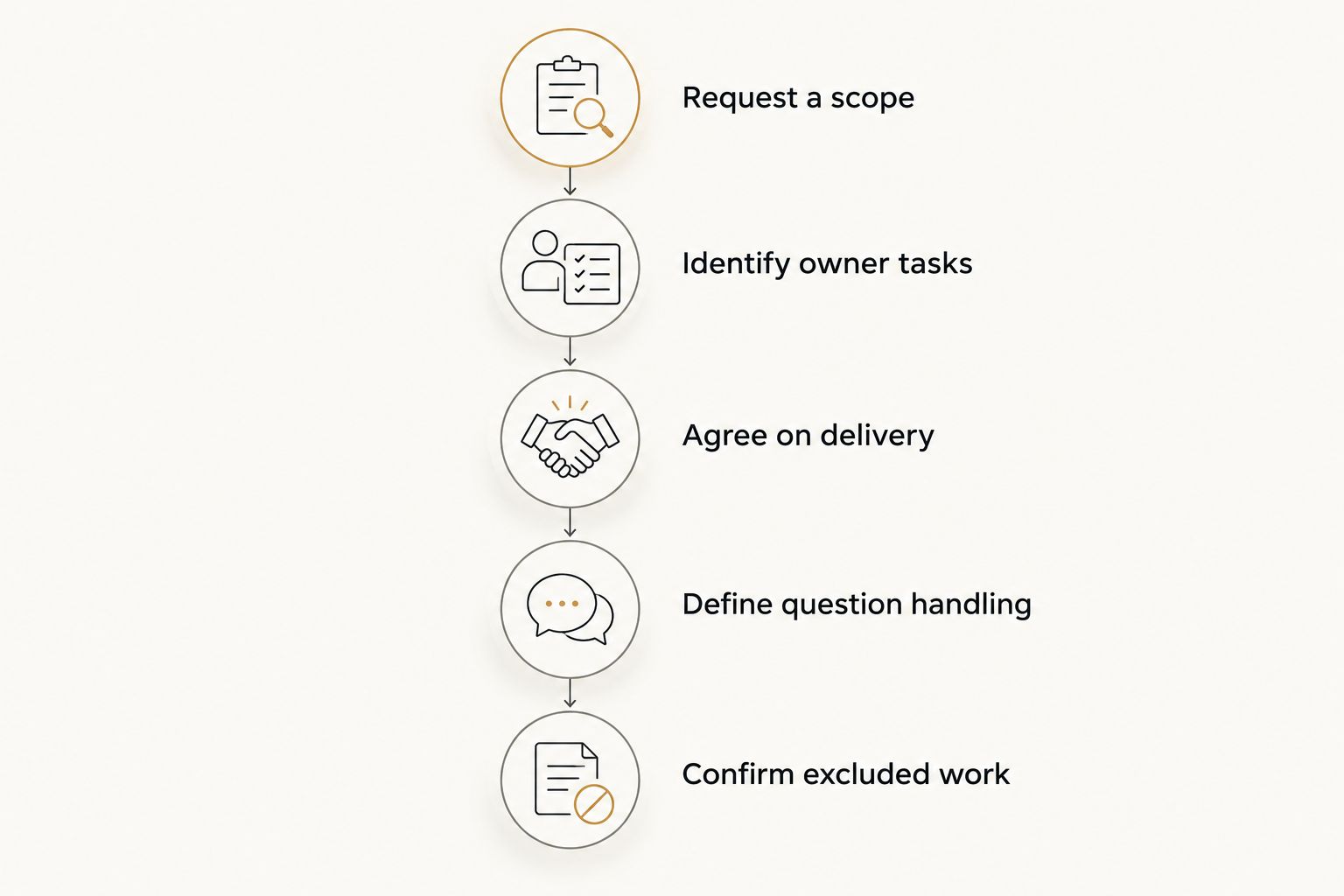
- Request a written scope.
- Identify owner tasks.
- Agree on report delivery.
- Define question handling.
- Confirm excluded work.
Test how restaurant transactions reach the books
You can trace a transaction manually before interviewing anyone. Follow a card-sales settlement from the point-of-sale report to the processor record and then to the bank deposit. Note where fees, tips, refunds, or timing differences appear.
Ask a prospective bookkeeper to explain that same path. A bank deposit is not a complete sales report. Delivery payouts, catering deposits, and gift-card activity also need supporting records rather than guesses based on money received.
For a Florida restaurant with seasonal swings, include both a busy period and a quieter period in the discussion. The goal is consistent treatment, not matching every month to the same sales pattern.
- Trace card settlements to supporting reports.
- Identify how tips enter payroll records.
- Separate delivery fees from sales activity.
- Document catering deposits and related events.
- Ask how gift-card activity is recorded.
Set access and approval boundaries
Before sharing account access, list what each person actually needs to do. Preparing the books and authorizing a bank transfer are different responsibilities. Hiring bookkeeping help does not require surrendering ownership of your records or letting every user move money.
Where your systems support separate permissions, use individual accounts and appropriate access levels. Avoid passing around a single password. Partners should also agree on who can authorize reimbursements and how disputed transactions are handled.
For your 2026 handoff, document these boundaries alongside the service scope. Ask Full Plate what access the proposed work requires and which approvals remain with the owners.
- Keep business account ownership with the restaurant.
- Use individual logins where available.
- Separate record preparation from payment approval.
- Document partner reimbursement approvals.
- Confirm how access ends if the relationship ends.
Review a sample month together
Before committing, assemble a review packet yourself. Choose 3 months of statements as a practical starting point and include the related sales, payroll, and owner-transaction records. This is a preparation suggestion, not a claim about any provider’s onboarding requirements.
Use the packet to discuss missing information and existing bookkeeping problems. Ask whether past cleanup is separate from ongoing monthly work. Starting a monthly arrangement does not, by itself, explain how incomplete earlier records will be handled.
Every partner should hear the same explanation of the proposed reports. A report that only the operating partner understands has not solved your shared-information problem.
- Gather statements and supporting sales records.
- Include outstanding questions about partner transfers.
- Ask for an explanation of sample reports.
- Separate cleanup work from recurring tasks.
- Record what must happen before the first close.
Establish a recurring partner review
Once you hire a provider, keep an owner review on the calendar. Bookkeeping organizes the records; partners still decide what to do with the information. Assign someone to collect questions so the provider does not receive conflicting instructions from different owners.
Compare results with your restaurant’s operating calendar. A quieter month after a seasonal rush needs context, but context should explain the records—not excuse missing records. For a seasonal business, consider reviewing 12 months of history when that history is available.
Put your 2026 review schedule in writing. Agree on what happens when information arrives late and how corrected reports will be shared.
- Review profit alongside cash obligations.
- Discuss owner balances separately from operating results.
- Track unanswered questions until resolved.
- Share corrected reports with every partner.
- Record decisions that affect future spending.
Compare your bookkeeping options
Choose the arrangement that matches who will do the work. A partner-managed system keeps preparation inside the restaurant. Ongoing monthly bookkeeping moves agreed tasks to a service provider, but owners still supply records, answer questions, and approve decisions.
Full Plate belongs in that service-provider conversation for Florida restaurant owners. Confirm its proposed deliverables directly; do not treat the label restaurant accounting services as proof that every accounting, tax, or payment task is included.
When comparing outsourced accounting services for small businesses, judge scope and responsibilities separately from location-specific tax knowledge. For a Florida restaurant, ask specifically who handles Florida-related filing questions and whether that work is included or referred elsewhere.
| Option | Best for | Main advantage | Key limitation |
|---|---|---|---|
| Partner-managed bookkeeping | Owners with time, orderly records, and agreed responsibilities | Direct control over preparation and transaction context | Recordkeeping competes with restaurant management |
| Owner-managed software | Owners comfortable maintaining the books themselves | A shared system for organizing records and reports | Software does not resolve unexplained transactions or partner disagreements |
| Full Plate monthly bookkeeping discussion | Florida owners considering an ongoing service relationship | A restaurant-focused service option to evaluate against your task list | Exact scope, reporting, and responsibilities require confirmation |
| Monthly bookkeeping plus separate tax advice | Partners who need recurring records and distinct tax guidance | Separates ongoing recordkeeping from tax decisions | Owners must coordinate responsibilities between providers |
None of these arrangements replaces an agreement between partners about authority, contributions, or distributions. Bring legal interpretation to your attorney and tax treatment to your tax professional. Give the bookkeeper the resulting instructions needed to maintain consistent records.
Common mistakes restaurant partners make
Treating available cash as permission to take distributions
A healthy-looking bank balance does not show every bill or upcoming commitment. Before discussing partner distributions, review the books alongside unpaid obligations and operating needs.
Keep the approval decision separate from recording the payment. Your bookkeeper needs to know what the payment represents, not simply that a transfer occurred.
Letting one partner control all financial information
It is reasonable for one owner to handle paperwork. It is different for that owner to be the only person who receives reports or understands unresolved transactions.
Agree on shared reporting before hiring. Equal access to the agreed information reduces reliance on one partner’s verbal summary without requiring every owner to do the bookkeeping.
Expecting the bookkeeper to settle partner disagreements
A bookkeeper can organize records and identify unclear transactions. The bookkeeper cannot decide whether a disputed purchase was authorized under your partnership agreement.
Resolve the underlying decision with the appropriate adviser, then provide written instructions. Otherwise, the same disagreement returns each time reports are prepared.
Hiring for monthly work without addressing the backlog
Missing statements and unexplained transfers do not disappear when a recurring engagement begins. Ask what work is needed to establish a reliable starting point and how it differs from the monthly service.
For a 2026 changeover, identify the last period everyone accepts as complete. That gives the handoff a defined boundary rather than an assumed clean slate.
FAQ
What restaurant accounting services do business partners need?
Restaurant partners need records that distinguish operating activity from each owner's contributions, loans, reimbursements, and distributions. Agree on shared reports, responsibilities, and a process for unresolved transactions before hiring a provider.
Can one partner keep doing the restaurant's books?
Yes, one partner can keep the books when that person has the time and maintains records the other partners can review. Agree on access, supporting documents, and how another person checks unclear owner transactions.
When should Florida restaurant partners hire monthly bookkeeping help?
Hire monthly bookkeeping help when keeping records current repeatedly competes with running the restaurant or leaves partners without agreed reports. Define the tasks you want transferred before comparing services.
Does hiring a restaurant bookkeeper mean giving up control?
No, hiring a bookkeeper does not require giving up ownership of your accounts or authority over spending. Define access permissions and payment approvals separately from bookkeeping responsibilities.
Should partner withdrawals be recorded as restaurant expenses?
A partner withdrawal is not automatically a restaurant expense. Its treatment depends on what the payment represents and your business structure; ask your tax professional to resolve uncertain classifications.
Does monthly restaurant bookkeeping include tax returns?
Tax returns are included only if the service agreement says they are. Confirm who handles filing, tax questions, payroll work, and coordination with any separate tax professional.
What should every partner ask Full Plate before hiring?
Ask Full Plate to define the monthly work, required records, report recipients, owner responsibilities, and handling of unresolved transactions. Also confirm whether existing cleanup work is separate from the ongoing engagement.
One last thing
Test the handoff with an unfamiliar owner transfer, not just a clean sales report. Ask who requests the explanation, where the supporting document goes, and when every partner sees the resolved entry. That small test makes the proposed working relationship concrete before you commit.