
For an independent Florida restaurant, send your bookkeeper the month's bank and credit card statements, sales and payment reports, payroll records, supplier bills, receipts, and records of cash, tips, taxes, and owner transactions. Include delivery-platform statements and explanations of unusual activity so your bookkeeper can connect what the restaurant sold, collected, spent, and still owes—not just categorize the bank deposits.
- Restaurant bookkeeping services need statements and supporting records; bank transactions alone do not explain restaurant sales.
- Send sales, payroll, supplier, delivery, cash, and tax records through an agreed secure process.
- Separate sales tax, tips, refunds, and processing fees instead of treating every deposit as revenue.
- Use Full Plate as a conversation starter for ongoing Florida restaurant bookkeeping; confirm responsibilities before hiring.
Why this matters
A busy dining room does not make the monthly records self-explanatory. Your bank shows money arriving and leaving, but a deposit does not tell your bookkeeper how much came from food sales, collected sales tax, or tips owed to staff.
The goal is a repeatable handoff, not a bigger pile of receipts. When evaluating Full Plate for restaurant bookkeeping services, start with who supplies each record, who checks it, and who resolves missing information.
For your 2026 bookkeeping routine, build the checklist around how your restaurant actually collects money and pays people. A counter-service restaurant with cash sales needs different supporting detail from a dining room that also receives delivery-platform payouts.
What records should you send your restaurant bookkeeper each month?
Send records that explain both the restaurant's activity and the movement of money. Agree on reporting dates and file formats before the first monthly handoff, then keep them consistent.
| Record group | What to send | What it helps explain |
|---|---|---|
| Bank accounts | Complete monthly statements for every business account | Deposits, payments, transfers, and ending balances |
| Credit cards | Complete statements and supporting purchase receipts | Business purchases, fees, payments, and balances |
| Restaurant sales | Point-of-sale summaries with sales, tax, tips, discounts, refunds, and payment types | What customers bought and how they paid |
| Payment processing | Settlement and fee reports | Differences between card sales and bank deposits |
| Payroll | Payroll registers, funding reports, and tax-payment records | Wages, withholding, employer taxes, and money withdrawn |
| Suppliers and expenses | Bills, receipts, supplier statements, and credits | Purchases, unpaid balances, and adjustments |
| Delivery platforms | Sales, refund, fee, and payout statements | Gross activity behind net deposits |
| Cash and tips | Cash-count records, deposit records, paid-out receipts, and tip records | Money that does not move directly through the bank |
| Taxes and other activity | Filing confirmations, notices, loan statements, and owner-transaction explanations | Obligations and transactions that need separate treatment |
Send 1 complete statement per account for each monthly statement period, rather than selected screenshots. If the statement period differs from the calendar month, tell your bookkeeper; do not silently leave out activity at the boundary.
Bank and credit card statements: send every page
Include accounts used for restaurant activity even when they had little activity during the month. A separate account used for payroll or tax payments still belongs in the handoff.
Bank-feed access is useful, but it does not replace the statement used to check the account balance. Include check details or payment explanations when the transaction description does not identify the purpose.
For credit cards, send receipts alongside statements. A restaurant-supply purchase and an owner’s personal purchase need different treatment even if they appear on the same card.
Sales and payment records: show gross activity
Send point-of-sale reports that separate sales from sales tax, tips, discounts, refunds, and payment methods. Also provide the reports explaining what the payment processor deposited and deducted.
A card payout is not the same thing as restaurant sales. Processing fees, settlement timing, refunds, and other adjustments can make the bank deposit different from the underlying activity.
For example, if a refund appears after the original sale, include enough detail to connect the transactions. Do not ask your bookkeeper to infer the explanation from the deposit amount alone.
Payroll and tips: include what was earned and paid
Send payroll reports that show wages, employee deductions, employer taxes, and the amounts withdrawn from the bank. Include records of payroll corrections and payments made outside the normal payroll run.
Explain how your restaurant records and distributes tips. Cash tips, card tips, and tip payouts need records that show what happened, not a handwritten total without context.
Your bookkeeper also needs to know about changes that affect the records, such as switching payroll providers. Confirm separately who handles payroll processing and filings; monthly bookkeeping should not be assumed to include either task.
Supplier bills and receipts: include unpaid items
Send food and beverage invoices, operating-expense receipts, supplier credits, and statements showing outstanding balances. Label whether each bill was paid, remains unpaid, or is disputed.
For a Florida restaurant receiving regular food deliveries, the invoice and the payment are separate records. Your bookkeeper needs to identify the purchase without counting it again when the payment appears.
Include equipment purchases, repair invoices, and financing paperwork rather than labeling everything as supplies. Explain what the restaurant bought; let the bookkeeper determine the accounting treatment.
Delivery, cash, and owner transactions: explain the exceptions
Delivery-platform deposits need their supporting statements. Send records showing sales, fees, refunds, adjustments, and payouts so the deposit does not become the only record of delivery activity.
For cash, include counts, deposits, and receipts for purchases paid from the till. Explain shortages or overages you identified rather than changing a record merely to make it match.
Label money the owner contributed, money taken out, and business purchases paid personally. These transactions are not interchangeable with customer sales or ordinary supplier payments.
Why your monthly records checklist varies
Use the same core checklist throughout 2026, then add records when your operations require them. These factors determine what your bookkeeper needs:
- Payment channels: Cash, cards, and delivery platforms leave different records. Each channel needs an explanation connecting sales with collections.
- Payroll arrangements: Payroll-provider reports, tip records, and corrections determine the supporting documents needed for labor activity.
- Supplier payment practices: Paying on delivery creates a different paper trail from carrying unpaid supplier balances.
- Accounts and financing: Additional bank accounts, credit cards, and loans each introduce balances and transactions to check.
- Owner involvement: Personally paid expenses and transfers between the owner and restaurant need clear labels.
- Service scope: Inventory work, bill payment, payroll, and tax filings require an explicit agreement rather than an assumption that bookkeeping includes everything.
If you track inventory, ask whether the monthly service uses your count records and how you should supply them. Do not expect purchase invoices alone to explain everything used, wasted, or left on the shelves.
How should you organize the monthly handoff?
Keep the process simple enough to repeat after a busy service. For your 2026 setup, use an agreed secure location and organize records by month, account, and record type.
- Collect records. Gather statements and reports from every account, sales channel, payroll provider, and supplier source on your checklist.
- Label exceptions. Add short explanations for owner purchases, unusual transfers, refunds, missing receipts, and disputed bills.
- Check completeness. Confirm that files cover the correct period, contain every page, and open properly.
- Resolve questions. Answer the bookkeeper's follow-up questions and retain the final reports with the supporting records.
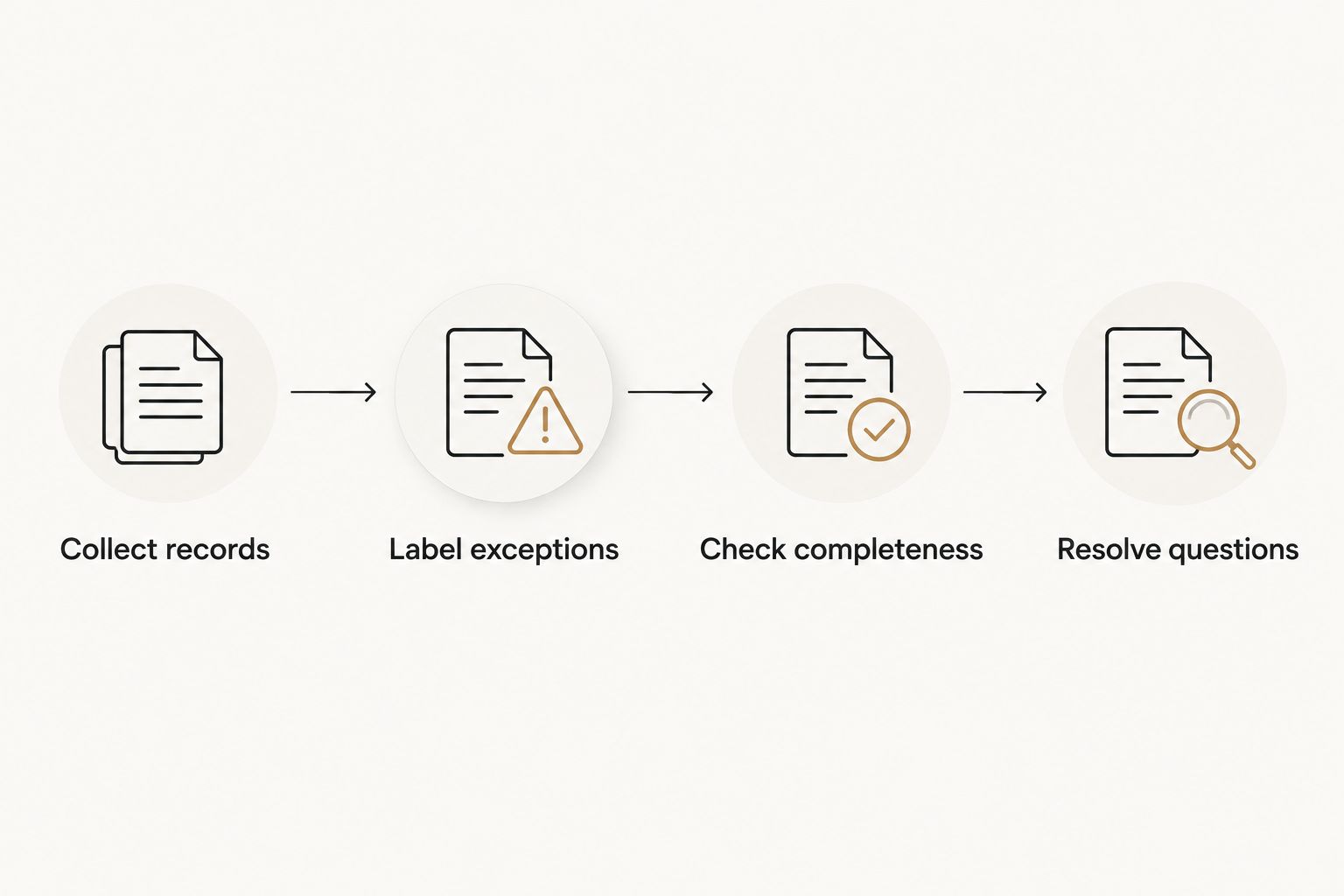
Before sending the folder, perform 3 checks: correct period, complete accounts, readable files. This is a submission check, not a substitute for reviewing the books.
Ask which records the bookkeeper can retrieve through authorized access and which you must supply. Avoid sending account passwords in ordinary messages; agree on an access method that preserves your control.
If you are changing providers, settle access and responsibility before transferring the work. This guide to handing over restaurant books without losing control addresses that decision.
Can you prepare these records yourself?
DIY record preparation is a sound option when you can keep it complete and consistent. You know why a cash withdrawal happened and which supplier delivery was disputed; that knowledge remains valuable after you hire help.
| Approach | Best for | Main advantage | Main limitation |
|---|---|---|---|
| Owner-managed bookkeeping | Owners able to collect records, check balances, and maintain the books consistently | Direct control over records and daily context | The owner must complete the accounting work as well as collect documents |
| Ongoing restaurant bookkeeping services | Owners seeking recurring help with an agreed monthly accounting scope | Defined responsibility for the contracted bookkeeping tasks | The restaurant still must provide source records and answer questions |
Professional help becomes useful when you collect the documents but repeatedly leave the accounting unfinished, cannot explain account differences, or need someone else responsible for the agreed monthly work.
Full Plate is a bookkeeping option for independent Florida restaurant owners considering ongoing monthly help. Confirm the deliverables, exclusions, access arrangements, and question-handling process before hiring; the service agreement determines what changes hands.
When you hire a bookkeeper, the owner’s role changes rather than disappears. You still approve business decisions, explain restaurant activity, protect access, and review the finished reports.
Discuss your monthly bookkeeping handoff
Use your records checklist to discuss responsibilities, access, and monthly service scope.
Do bank statements replace receipts and sales reports?
Bank statements do not replace receipts and sales reports. They show account activity, while supporting records explain the purpose and components of that activity.
Keep 2 separate records for a card purchase: the statement entry and the receipt. The statement supports the payment trail; the receipt supports what you bought.
What should you do when a monthly record is missing?
Tell your bookkeeper which record is missing and request a replacement from the original source. Send the available records with the gap clearly identified instead of concealing it or inventing a description.
A supplier invoice, payroll report, and bank statement require different follow-up. Agree on who requests replacements and how unresolved items appear in the monthly work.
When should you send the monthly bookkeeping records?
Send the records according to a recurring deadline agreed with your bookkeeper. Set that deadline around when statements and reports become available, and distinguish it from the date you expect finished financial reports.
For 2026, put both dates on your operating calendar. Also agree on how quickly the restaurant will answer questions so an unanswered transaction does not become a recurring obstacle.
FAQ
What should I send restaurant bookkeeping services every month?
Send complete bank and credit card statements, sales and payment reports, payroll records, supplier bills, receipts, and cash and tip records. Include delivery statements, tax documents, and explanations of owner transactions when applicable.
Can my restaurant bookkeeper just use the bank feed?
A bank feed alone does not provide all the information needed to explain restaurant activity. Your bookkeeper also needs statements and supporting records for sales, fees, payroll, purchases, and other transactions.
Do I need to send receipts if I already sent the credit card statement?
Yes, send purchase receipts as well as the credit card statement. The statement records the charge, while the receipt identifies what the restaurant purchased.
Should I send unpaid food supplier invoices?
Yes, include unpaid supplier invoices and label their status. Your bookkeeper needs to distinguish outstanding bills from purchases already paid and identify credits or disputes.
What records should I send for restaurant delivery apps?
Send delivery-platform statements showing sales, fees, refunds, adjustments, and payouts. The bank deposit alone does not explain the gross activity behind the payment.
Can I still manage my restaurant records after hiring a bookkeeper?
Yes, you can continue collecting documents, approving payments, and explaining transactions after hiring a bookkeeper. Agree on responsibilities so owner tasks and contracted bookkeeping tasks remain clear.
What should I ask Full Plate before starting monthly bookkeeping?
Ask Full Plate which records you must supply, which records it will retrieve, and what the monthly service includes. Confirm deadlines, access controls, follow-up responsibilities, and any separately contracted payroll or tax work.
One last thing
Explain the unusual transaction when it happens, not when the month is over. A short note about a supplier credit, owner-paid repair, or cash purchase preserves context that a bank description cannot supply.
Make that your simplest 2026 bookkeeping habit. Better explanations start at the restaurant, whether you keep doing the books yourself or hire monthly help.