
Monthly restaurant bookkeeping services should include recorded sales and expenses, reconciled bank and credit card accounts, payroll and tip reconciliation, and monthly financial reports you can understand. For an independent Florida restaurant, the agreement should also spell out who handles sales tax records, delivery-platform activity, missing documents, and questions after the reports arrive. Tax filing, payroll processing, and paying bills are separate responsibilities unless your agreement includes them.
- Restaurant bookkeeping services should reconcile sales, deposits, expenses, payroll, and tips—not just categorize bank transactions.
- Florida owners should confirm sales tax responsibilities and delivery-platform reconciliation before signing.
- Evaluate Full Plate against a written monthly scope, clear deadlines, and an explanation of your reports.
- DIY bookkeeping remains a practical choice when you can keep accounts reconciled and records current.
What should monthly restaurant bookkeeping services include?
The minimum is a complete, reconciled set of books with a clear explanation of the results. A transaction list alone does not meet that standard. Your monthly service should connect what your restaurant sold, what reached the bank, what you spent, and what remains unpaid.
When you consider Full Plate, use the same written checklist you would use for any bookkeeping proposal. Ask what is included, what remains your responsibility, and how unfinished items are handled.
| Monthly responsibility | What you should receive | What to clarify before hiring |
|---|---|---|
| Sales recording | Sales organized into useful categories | How point-of-sale records reach the books |
| Deposit reconciliation | An explanation of differences between sales and deposits | Who checks fees, refunds, tips, and timing differences |
| Expense recording | Consistent categories supported by records | Who supplies receipts and resolves unclear purchases |
| Account reconciliation | Bank and credit card balances checked against statements | Which accounts are covered |
| Payroll and tips | Payroll activity checked against payroll reports | Whether payroll processing is included or separate |
| Sales tax records | Tax collected recorded separately from restaurant revenue | Who prepares, reviews, files, and pays returns |
| Monthly reporting | Financial statements and explanations of unresolved items | Delivery timing and access to questions |
This is a scope checklist for choosing a provider in 2026, not a statement that every bookkeeping package includes every task. The agreement should make those distinctions explicit.
Why this matters for a Florida restaurant
A card deposit is not the same thing as restaurant revenue. Processor fees, refunds, collected taxes, and tips can affect how sales activity connects to cash received. Delivery-platform payouts introduce another set of records to compare.
For a Florida restaurant, sales tax responsibilities also deserve a direct conversation. Ask how the bookkeeper separates tax collected from revenue and coordinates with whoever handles your returns. Check applicable requirements with the Florida Department of Revenue rather than assuming a bookkeeping engagement includes tax advice.
Hire for a dependable monthly process, not merely access to accounting software. Software stores transactions; your agreement determines who checks them, resolves discrepancies, and explains the results.
Sales and deposit reconciliation
Your monthly books should reflect the restaurant's sales activity, not just the net amount deposited into the bank. Ask how the provider uses point-of-sale summaries, processor statements, and delivery-platform statements together.
For example, a delivery payout can differ from the associated sales because the platform deducts fees or accounts for refunds. Recording the payout as the entire sale can obscure both revenue and expenses. Your provider should explain how those pieces are recorded and checked.
Ask these questions before accepting the scope:
- Are food, beverage, and other sales separated where useful?
- How are discounts, refunds, and voids checked?
- How are card fees and delivery commissions recorded?
- How are cash deposits compared with recorded cash sales?
- Who investigates a deposit that does not match supporting records?
You still have a role after hiring. Someone at the restaurant must provide access to records and explain unusual activity. Outsourcing the books does not replace your cash-handling procedures.
Expense recording and account reconciliation
Expense categorization should stay consistent from month to month. If food purchases move between unrelated categories, comparing results becomes less useful. Ask for categories that distinguish meaningful restaurant expenses without creating a reporting system you cannot maintain.
Bank and credit card reconciliation checks the accounting records against account statements. It helps identify missing transactions, duplicates, and items recorded in the wrong account. Ask whether every business account is included, including accounts used less frequently.
An imported bank feed is not a completed reconciliation. The monthly work should include reviewing the records, investigating differences, and documenting anything still unresolved.
If you pay restaurant expenses personally or make personal purchases through a business account, identify those transactions promptly. Ask your bookkeeper how to document them rather than assigning them to food, supplies, or another operating expense.
Payroll, tips, and sales tax responsibilities
Payroll processing and payroll bookkeeping are different jobs. A service can record wages, employer payroll taxes, deductions, and payments without running payroll itself. Your agreement should identify the payroll processor and the person responsible for checking its reports against the books.
Tips also need an explicit process. Ask how tip records move from the point-of-sale system into payroll and accounting, and who answers discrepancies. Do not assume the person reconciling your bank account is also reviewing wage-and-hour compliance.
For a 2026 engagement, name the person responsible for each sales tax step: preparing records, reviewing the return, submitting it, and authorizing payment. Avoid a vague promise to handle taxes.
If you need tax advice or help with a compliance question, confirm who is qualified and engaged to provide it. Monthly bookkeeping should support that work without being mistaken for it.
Monthly financial reports and an explanation
Ask for 3 reports: a profit and loss statement, a balance sheet, and a cash flow statement. These answer different questions. Reading only the profit and loss statement leaves out important information about cash and unpaid obligations.
| Report | Best for | Main limitation |
|---|---|---|
| Profit and loss statement | Reviewing revenue and expenses over a period | Does not explain every movement in cash |
| Balance sheet | Reviewing assets, liabilities, and equity at a date | Does not show the full period's operating activity |
| Cash flow statement | Understanding changes in cash | Does not replace detailed sales or expense analysis |
You should also receive explanations of material adjustments and unresolved questions. A report delivered with unexplained balances is harder to use when deciding whether to hire, replace equipment, or adjust purchasing.
Ask whether monthly reporting includes a discussion or written commentary. If you want comparisons across 12 months, request that format before signing. Report usefulness depends on consistent records and the questions you need answered, not the number of pages delivered.
Why monthly bookkeeping scope varies
The work changes with your restaurant's records and operating setup. Compare proposals against these factors rather than assuming every monthly package covers the same workload:
- Sales channels: Dining room, takeout, and delivery-platform activity create different records to reconcile.
- Payment accounts: Each bank account, credit card, and processor adds records to review.
- Payroll setup: Tip records and payroll reports require a defined handoff.
- Bill handling: Recording paid expenses differs from tracking unpaid invoices or scheduling payments.
- Inventory needs: Recording purchases differs from maintaining inventory records and adjusting inventory balances.
- Record condition: Current books and incomplete prior records require different starting work.
A Florida restaurant with seasonal changes in activity should also ask how reporting will distinguish a normal operating shift from a recordkeeping issue. Give the provider context, such as changed opening hours or a temporary closure, instead of expecting the numbers to explain themselves.
Should I do restaurant bookkeeping myself or hire a service?
DIY bookkeeping is reasonable when you can keep records current, reconcile accounts, and explain the balances. Hiring becomes useful when those tasks repeatedly displace restaurant management or remain unfinished.
| Approach | Best for | Advantage | Trade-off |
|---|---|---|---|
| Owner-managed bookkeeping | Owners with time and a repeatable process | Direct knowledge of transactions | Requires regular attention and independent checking |
| Ongoing bookkeeping service | Owners ready to delegate recurring accounting work | Defined responsibility for the monthly process | Still requires records, access, and owner decisions |
Doing the books yourself does not mean doing everything without help. You can maintain daily records and seek professional assistance for cleanup, reporting, or tax questions. Just define those boundaries clearly.
Full Plate is a bookkeeping option for Florida restaurant owners considering an ongoing monthly handoff. Evaluate Full Plate restaurant bookkeeping services by the proposed responsibilities, reporting, and communication—not by assuming every accounting task transfers automatically.
What should change when I hire a bookkeeper?
Hiring should change who performs the agreed recurring work, not remove your access to the numbers. You should know where records live, how to submit documents, and whom to ask when something looks wrong.
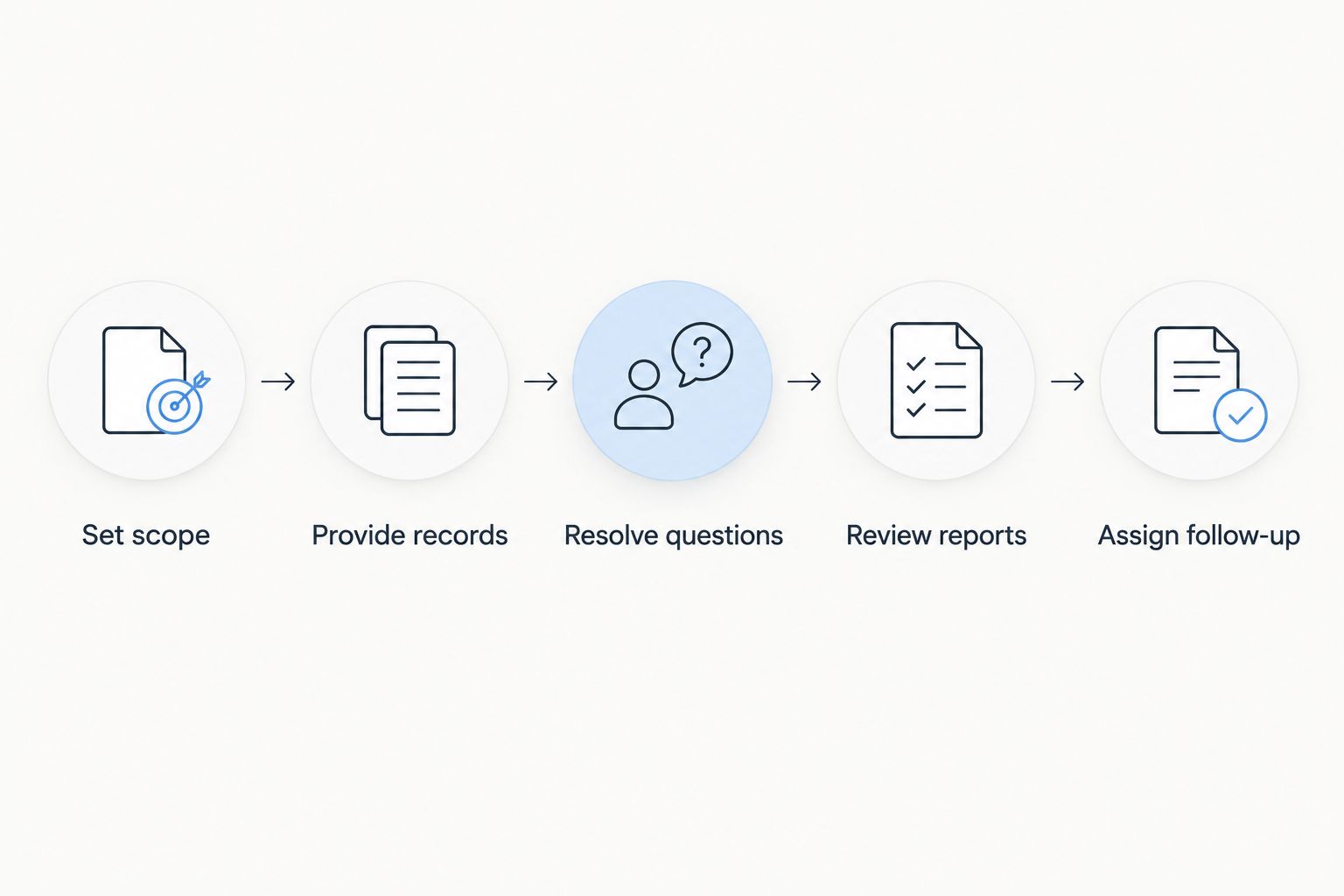
Use this sequence to define the handoff:
- Set scope. List included accounts, systems, reports, and exclusions.
- Provide records. Agree on access, document submission, and responsibility for missing items.
- Resolve questions. Choose a contact and a process for unclear transactions.
- Review reports. Set expectations for delivery and explanations.
- Assign follow-up. Record who handles corrections and outstanding decisions.
Keep ownership of your business accounts and approve access deliberately. Ask how access changes if the engagement ends, and how you receive your accounting records. Those questions belong in the hiring conversation, not only at cancellation.
What should I ask before signing a monthly agreement?
Request a sample reporting format with confidential information removed. Then ask the provider to walk through how a restaurant sale becomes a deposit, an accounting entry, and part of a monthly report.
For your 2026 agreement, put these answers in writing:
- What marks the month as complete?
- What happens when supporting documents arrive late?
- Is prior-period cleanup separate from ongoing work?
- Who monitors unresolved transactions?
- Are bill payment, payroll processing, and tax filings included?
- How do you ask questions after receiving reports?
A useful proposal tells you what you must still do. Clear exclusions protect both sides and make competing proposals easier to compare.
If you speak with Full Plate, bring your list of accounts, sales systems, payroll arrangements, and unfinished bookkeeping. Ask for a scope that matches that setup rather than starting with an undefined request to handle everything.
FAQ
What should restaurant bookkeeping services include every month?
Restaurant bookkeeping services should include sales and expense recording, account reconciliation, payroll and tip reconciliation, and monthly financial reports. The agreement should separately identify responsibility for tax filings, bill payment, and missing records.
Can I keep doing my restaurant's bookkeeping myself?
You can manage restaurant bookkeeping yourself when you have a reliable process for recording activity, reconciling accounts, and reviewing reports. Professional help becomes useful when that work stays unfinished or takes time you need for restaurant operations.
Does monthly bookkeeping include filing Florida sales tax returns?
Monthly bookkeeping includes Florida sales tax filing only when your agreement specifically assigns that task. Confirm who prepares, reviews, submits, and pays each return, and check applicable requirements with the Florida Department of Revenue.
Does a restaurant bookkeeper run payroll too?
A restaurant bookkeeper runs payroll only if payroll processing is part of the agreed service. Recording and reconciling payroll reports is separate from calculating payroll, submitting it, or advising on employment compliance.
Which monthly reports should I request for my restaurant?
Request 3 reports: a profit and loss statement, a balance sheet, and a cash flow statement. Ask for explanations of adjustments and unresolved items so you can understand the results.
What should I ask a restaurant bookkeeper before hiring in 2026?
Ask a restaurant bookkeeper to define the monthly scope, reporting schedule, owner responsibilities, and exclusions in writing. Also confirm how the provider handles delivery-platform payouts, tips, missing documents, and questions after reporting.
One last thing
Before choosing restaurant bookkeeping services in 2026, ask what happens to a transaction nobody can explain. That answer reveals whether unresolved items receive follow-up or simply remain in the books.
Choose a process that makes unanswered questions visible. You do not need to become an accountant, but you should know what is finished, what is outstanding, and what requires your decision.