
A restaurant accountant should review your Florida second-location plan before you sign a lease, commit to financing, or use the first restaurant’s cash to fund the opening. Start while you can still change the plan: the review needs to cover both the new restaurant’s funding needs and the original restaurant’s ability to keep paying its bills.
- Bring a restaurant accountant into a second-location plan before signing a lease or committing operating cash.
- Separate the new restaurant’s opening budget from the first restaurant’s ongoing cash needs.
- DIY bookkeeping remains useful when records are current, reconciled, and organized by location.
- Consider Full Plate for ongoing restaurant bookkeeping; confirm expansion analysis separately before hiring.
Why this matters for a Florida restaurant owner
A busy dining room does not tell you how much cash you can safely put into another restaurant. Sales deposits, supplier bills, payroll, loan payments, and owner withdrawals all affect that decision differently.
For your 2026 expansion plan, the useful question is not simply whether the new location can make money. It is whether you can fund the opening without leaving the existing restaurant short.
Full Plate is best considered by independent Florida restaurant owners seeking ongoing monthly restaurant bookkeeping. When discussing Full Plate, separate the recurring bookkeeping work from any requested expansion analysis so you know what your engagement covers.
When should a restaurant accountant review a second-location plan?
Arrange the first review before making a binding commitment, then revisit the plan as actual terms replace estimates. Waiting until the lease is signed leaves fewer decisions open to change.
Give the accountant a decision to assess, not just a folder of statements. Explain the proposed opening, how you intend to fund it, and what you need the original restaurant to contribute.
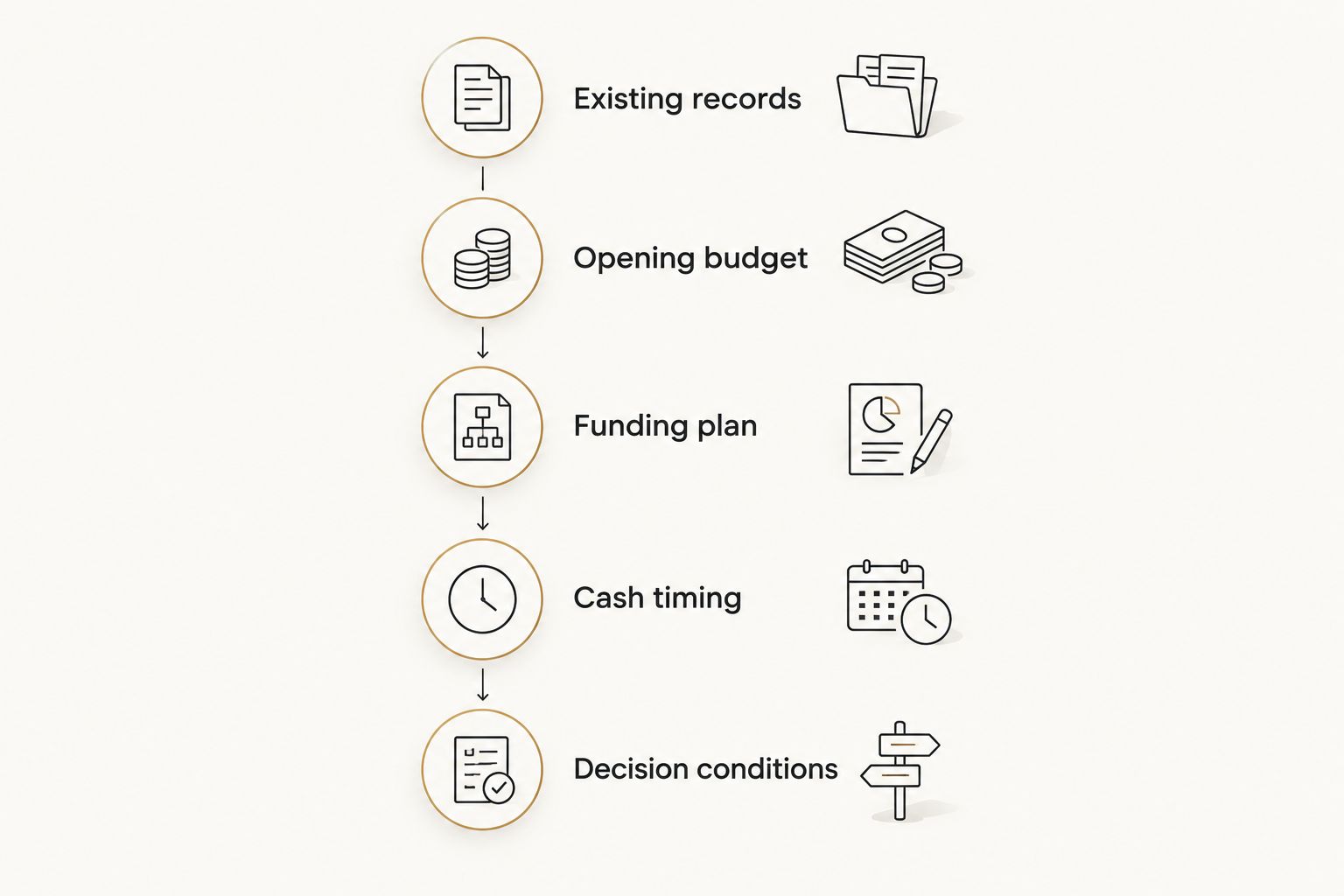
1. Establish the first restaurant’s position
Prepare reconciled bank and credit card accounts, profit-and-loss reports, a balance sheet, payroll records, debt details, and outstanding bills. Include owner contributions and withdrawals so transfers do not get mistaken for operating results.
Request a review of 12 months of records when available. That gives the accountant a full annual cycle to examine rather than only your strongest stretch. For a Florida restaurant with seasonal demand, identify which months reflect your busy period and which reflect your slower period.
2. Separate the opening budget
List deposits, build-out obligations, equipment, initial supplies, hiring, training, and other planned opening expenses separately from ordinary operations. Mark each item as a documented commitment or an estimate.
Do not treat an opening budget as a cash forecast. The budget describes what you expect to spend; the forecast shows when the money leaves and what remains available to pay other obligations.
3. Test the funding plan
Identify where the opening money comes from: business cash, owner funds, borrowing, or a combination. Ask the accountant to distinguish money already available from money that depends on approval or future trading.
If the first restaurant will support the second, show the transfer explicitly. Otherwise, the existing location can look financially comfortable on paper while its bank balance is being committed elsewhere.
4. Map the cash timing
Ask for a 13-week cash forecast as a working planning tool, then extend the view to cover the proposed opening and early operations. The purpose is to expose timing gaps, not to present an opening date as certain.
Include payroll dates, supplier payment terms, debt payments, and planned transfers. If your 2026 opening date changes, update the forecast rather than carrying forward the original assumptions.
5. Record the decision conditions
Finish the review with clear conditions for proceeding. These can include securing funding, resolving missing records, revising the opening budget, or protecting a cash balance needed by the original restaurant.
A useful review tells you what must be true before you commit. It should also identify which changes require another review, such as different lease terms or a larger contribution from the existing business.
Before signing: review the commitments you cannot easily reverse
The first review belongs before the lease, financing agreement, or major purchase becomes binding. Bring the proposed terms, including payment timing, deposits, guarantees, and responsibilities for work on the space.
Your restaurant accountant’s role is to assess the financial effect. Your attorney’s role is to advise on the legal obligations. Ask each adviser to identify questions for the other rather than assuming either review covers everything.
For a 2026 lease decision, connect each obligation to the cash forecast. A payment scheduled before opening still needs funding even when the restaurant has not begun trading.
Do not approve the expansion solely because the projected profit looks positive. Check whether cash is available when the commitments fall due.
Before opening: replace estimates with documented terms
Review the plan again when actual funding terms, supplier arrangements, staffing plans, and build-out commitments are available. A proposal built around estimates needs updating when those estimates become obligations.
Keep a change log that states what changed, who confirmed it, and how it affects cash. This helps you distinguish a genuine revision from an old assumption that nobody has checked.
Ask the accountant to examine the effect on both restaurants. Moving an experienced manager, sharing equipment, or transferring cash creates a planning question for the original location as well as the new one.
You remain responsible for operational assumptions. The accountant needs your explanation of service hours, staffing coverage, and opening plans to assess their financial consequences.
DIY bookkeeping, monthly bookkeeping, or an expansion review?
These are different responsibilities, not interchangeable packages. You can keep your own books and still hire an accountant to review a second-location plan.
| Approach | Best for | Main advantage | Main limitation |
|---|---|---|---|
| DIY bookkeeping | Owners keeping current, reconciled records | Direct control over records and transaction details | The owner must make time for consistent close work |
| Monthly bookkeeping service | Owners wanting recurring recordkeeping support | Defined responsibility for agreed monthly tasks | Forecasting and expansion advice require a separate scope check |
| Restaurant accountant review | Owners assessing an expansion commitment | Financial scrutiny of assumptions, funding, and cash timing | Conclusions depend on accurate records and realistic operating assumptions |
Keep DIY bookkeeping if the work is current and you can explain the balances. Professional help becomes useful when the recurring close competes with running the restaurant, or when you need a separate assessment of the expansion decision.
Hiring a monthly bookkeeper changes who performs the agreed recordkeeping tasks. It does not remove your responsibility to approve spending, explain unusual transactions, or decide whether to expand.
Why the timing of a restaurant accountant’s review varies
The right review date follows your commitments and record quality, not a generic expansion calendar. Move the review earlier when the decision involves any of these factors:
- Incomplete records. Missing statements, uncategorized transactions, or unreconciled accounts need attention before the accountant can rely on the reports.
- Seasonal trading. If your Florida restaurant depends on a busy season, test the plan against the slower period rather than treating peak sales as normal.
- Shared funding. When the first restaurant funds the opening, assess its remaining cash and obligations alongside the new location’s needs.
- Shared staff or equipment. Identify what moves between locations and how the original restaurant will operate afterward.
- Changing commitments. Revisit the review when lease terms, borrowing arrangements, or build-out responsibilities change.
For your 2026 cash forecast, distinguish confirmed information from assumptions. An estimated opening schedule and an executed payment obligation should not carry the same level of certainty.
What should you ask before hiring monthly bookkeeping help?
Start with responsibilities, not a broad promise to handle the finances. Ask the provider to explain what happens each month, what you must supply, and how unresolved questions get raised.
When considering Full Plate for restaurant bookkeeping, use the same written-scope questions you would ask any provider:
- Which accounts and payment channels are included?
- Who matches sales activity to deposits and checks differences?
- How will reports separate the existing restaurant from the new location?
- Who records transfers, shared expenses, and owner-funded purchases?
- Does the engagement include cleanup, forecasts, or accountant coordination?
- What information must you provide before the monthly reports are completed?
Ask for those answers in the engagement terms. A useful conversation is not a substitute for an agreed division of work.
Use this guide to choosing a restaurant accountant in Florida to keep the hiring discussion focused on restaurant experience, responsibilities, and the work your expansion requires.
Do not assume ongoing bookkeeping includes a second-location feasibility review. Confirm who will perform that analysis and what they need before you rely on it.
Discuss your bookkeeping needs
Ask about monthly responsibilities and the records needed before a second-location review.
What should you keep control of after hiring help?
Keep approval of payments, borrowing, owner withdrawals, and transfers between restaurants. Give the bookkeeper access appropriate to the agreed work, and keep your own access to statements and reports.
Maintain a clear separation between 2 locations in the bookkeeping records, even when they share ownership. Ask the accountant how to record shared expenses and transfers without hiding which restaurant generated the revenue or incurred the expense.
Read the monthly reports with a short list of questions: What changed? What remains unpaid? What money has been committed? Which balances still need an explanation?
Your monthly bookkeeping process should make those questions easier to answer. It should not leave you waiting until the next expansion meeting to discover an unresolved issue.
Can you review a second-location plan while doing your own books?
Yes. DIY bookkeeping and an accountant’s expansion review can work together. The requirement is usable records, not a particular person entering the transactions.
Before handing over your 2026 plan, reconcile the accounts and explain unusual entries. Tell the accountant which assumptions you have checked and which still depend on negotiations or operational decisions.
Should you wait until financing is approved?
No. Involve the accountant before you commit to the funding structure. An early review lets you examine repayments, owner contributions, and the first restaurant’s support before accepting obligations.
Review the plan again when financing terms are confirmed. Approval alone does not answer whether the repayment schedule fits the combined cash needs of the restaurants.
Does a profitable first restaurant make the second location safe?
No. Profit at the first restaurant does not establish that the expansion is affordable. The review also needs to account for cash timing, existing obligations, opening commitments, and the money the owner needs to withdraw.
Ask for separate views of the operating restaurant, the opening project, and the combined position. Each answers a different question about the decision.
FAQ
When should I first speak to a restaurant accountant about another location?
Speak to a restaurant accountant before signing a lease, accepting financing terms, or committing the first restaurant’s cash. Start while the funding plan and opening commitments can still change.
What records should I bring to a second-location review?
Bring reconciled financial reports, bank and credit card statements, payroll records, debt details, outstanding bills, and the proposed opening budget. Include funding assumptions and proposed lease terms so the review addresses commitments as well as past results.
Can I keep doing my own restaurant bookkeeping during expansion?
Yes, you can keep doing your own bookkeeping if the records remain current and reconciled. You can hire an accountant separately to assess expansion assumptions and funding.
Does monthly restaurant bookkeeping include expansion planning?
Expansion planning must be confirmed in the engagement scope; do not assume monthly bookkeeping includes it. Ask who prepares forecasts, reviews funding, and assesses the effect on the existing restaurant.
Should I use my restaurant’s bank balance to decide what I can invest?
No, the bank balance alone does not show what you can invest. Account for unpaid bills, payroll, debt payments, and other commitments before treating cash as available for expansion.
How should I handle bookkeeping for both restaurant locations?
Keep each location’s activity identifiable and agree on how shared expenses and transfers will be recorded. Ask the accountant whether the reports let you assess each restaurant separately and the business as a whole.
One last thing
Ask what happens to the original restaurant if the opening is delayed. That question connects the expansion plan to the business already paying your bills.
Before hiring Full Plate or another monthly bookkeeping provider, agree on how commitments and transfers will reach the books. Current records give your accountant a sounder starting point; they do not replace a separate decision about whether to proceed.