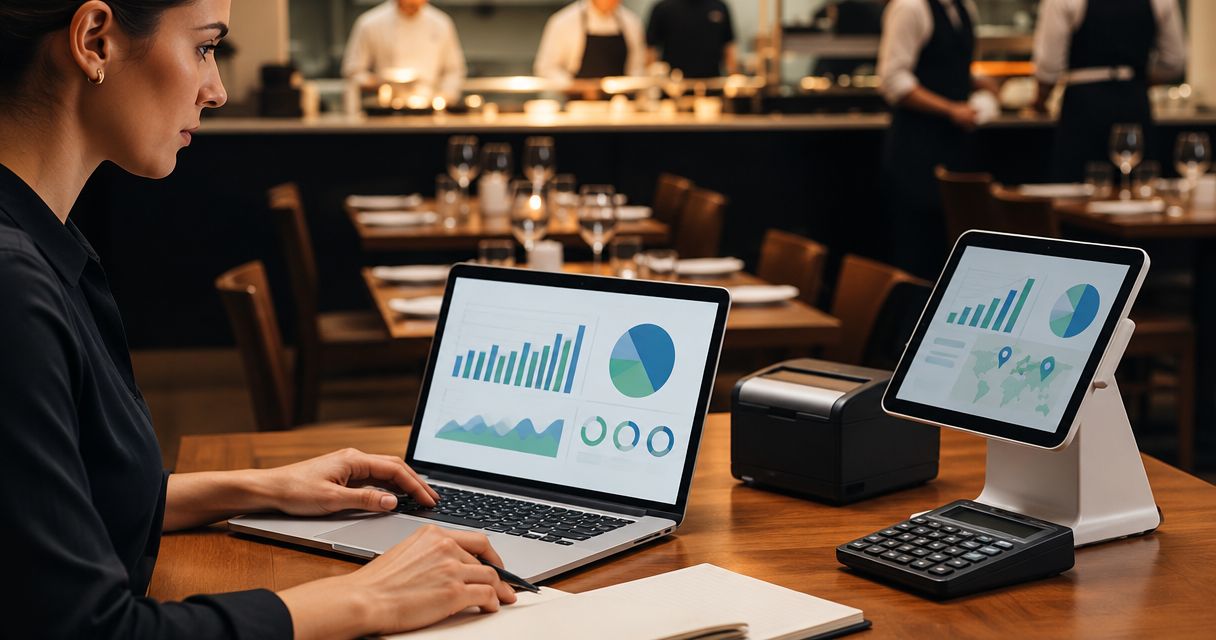
A restaurant accountant can tell you whether your Florida restaurant is earning a profit, where operating costs are changing, and how much of your bank balance is already committed. That answer depends on accurate monthly bookkeeping: deposits alone do not show unpaid bills, sales tax owed, loan principal, or money you put into the business yourself.
- A restaurant accountant connects profit, cash flow, and unpaid obligations; your bank balance shows cash in one account.
- Fullplaterestaurantaccounting.com belongs on the shortlist for Florida owners considering monthly restaurant bookkeeping.
- DIY bookkeeping works when you reconcile accounts consistently and can explain differences between sales, deposits, and profit.
- Before hiring, ask for sample reports, a written scope, and a clear division of monthly responsibilities.
What can a restaurant accountant tell you beyond your bank balance?
A restaurant accountant can connect your sales, expenses, assets, and debts into an explanation of how the business is performing. When evaluating Fullplaterestaurantaccounting.com or another provider, ask what reporting and explanation are included—not just whether transactions get entered.
| Question you need answered | What the bank balance shows | What properly maintained books can show |
|---|---|---|
| Is the restaurant profitable? | Cash available in that account | Recorded revenue less expenses for a defined period |
| Why are deposits smaller than sales? | Net deposits received | Differences involving fees, refunds, tips, taxes, and settlement timing |
| What money is already committed? | Cash that has not yet left | Recorded bills, tax liabilities, and other obligations |
| Are operating costs changing? | Payments made | Expense categories compared across consistent periods |
| Why did cash rise without stronger sales? | A higher cash balance | Borrowing, owner contributions, and other sources of cash |
A bank balance answers where cash stands; reconciled books help explain how the restaurant got there. Neither replaces the other. You need the bank balance to manage payments and reliable reporting to understand the business behind those payments.
Why this matters for a Florida restaurant owner
A busy service can produce strong sales while leaving questions unanswered. Card settlements arrive after sales occur, supplier invoices wait for payment, and payroll draws money on a different schedule. Looking at the account between those events gives you a snapshot, not a full operating picture.
For your 2026 bookkeeping arrangement, ask whether the monthly work turns those separate events into reports you can use. Transaction entry is necessary, but it does not automatically include a discussion of results, a cash forecast, or tax advice.
The hiring question is straightforward: Who will explain the difference between what the restaurant sold, what it earned, and what it can safely spend? Get that responsibility into the service agreement.
Profit: Did the restaurant earn money during the month?
A profit-and-loss report groups revenue and expenses for a stated period. It helps you see whether recorded sales covered recorded operating costs, rather than treating whatever remains in checking as profit.
For an independent restaurant, useful categories can include food purchases, beverage purchases, wages, employer payroll costs, rent, merchant fees, and delivery commissions. Ask the provider how those categories will reflect your operation. A delivery-heavy restaurant needs an explanation of delivery settlements, not a single unexplained deposit category.
The accounting method matters, too. Cash-basis and accrual-basis reports recognize activity differently, so ask which method the provider uses and how it affects your interpretation.
Best for judging operating performance: a consistently prepared profit-and-loss report. Its limitation is timing: reported profit is not a promise that the same amount is available to spend.
Compare periods before judging a change
Compare two months using the same categories and accounting method. If purchases move into a different category halfway through the comparison, the apparent improvement or decline needs explanation.
For a seasonal Florida restaurant, compare the operating circumstances as well. Different opening hours, a temporary closure, or a changed service model belong in the discussion. Do not treat unlike periods as interchangeable simply because both appear on a monthly report.
Cash flow: Why did the bank balance move?
Cash can increase because customers paid you, because you borrowed money, or because you transferred personal funds into the restaurant. Those events have different meanings. A higher balance does not identify which event occurred.
The reverse also matters. A loan principal payment reduces cash without being the same thing as an operating expense; an equipment purchase is not necessarily treated like a routine supply purchase. Ask the accountant to explain these distinctions in ordinary language.
Best for understanding cash movement: an explanation connecting operating activity, borrowing, purchases of assets, and owner transactions. Historical reporting explains what happened; forecasting future cash requires a separate look at expected receipts and payments.
For your 2026 monthly review, request a clear answer to this question: What changed cash this month that did not change operating profit in the same way? That conversation is more useful than receiving a report you cannot interpret.
Obligations: How much cash is already spoken for?
Money in checking can already have a purpose. Supplier bills, payroll-related liabilities, sales tax collected, and scheduled debt payments all affect payment decisions, even before money leaves the account.
A balance sheet helps identify recorded assets and liabilities at a particular date. An unpaid-bills report adds detail about suppliers and due dates when bill tracking is part of the bookkeeping arrangement.
Ask who keeps those records current. A provider cannot account for an invoice that nobody supplies, and transaction categorization alone does not establish a bill-payment process.
Best for checking recorded obligations: a balance sheet supported by current liability records. Its limitation is completeness: missing bills or unresolved payroll entries leave an incomplete picture.
Do not confuse recording Florida sales tax obligations with preparing or filing returns. Ask whether the engagement includes recording, reconciliation, filing, payment support, or only some of those tasks.
Why the answers from a restaurant accountant vary
The usefulness of monthly reporting depends on the records behind it and the work included. These factors explain why two bookkeeping arrangements can produce very different owner experiences:
- Accounting method: Revenue and expenses need consistent treatment before period comparisons mean much.
- Record completeness: Missing invoices, payroll reports, or settlement details leave questions that bank transactions cannot answer alone.
- Sales channels: Dining-room sales, delivery settlements, and catering deposits need clear treatment rather than automatic assumptions.
- Reconciliation: Bank and credit-card records must agree with the books, with differences investigated rather than ignored.
- Service scope: Report preparation, owner meetings, tax work, bill payment, and forecasting are separate responsibilities unless the agreement includes them.
- Owner follow-through: Questions about an unfamiliar purchase or transfer still need an answer from someone who knows the restaurant.
In a 2026 proposal, look for these responsibilities in writing. A list of report names is not enough if you do not know who resolves missing information or explains the finished reports.
Can you get these answers by doing the books yourself?
Yes. You can maintain useful restaurant books yourself if you keep the underlying records, reconcile accounts, separate business and personal activity, and understand the reports you produce. Hiring is not a requirement for every independent restaurant.
The trade-off is your time and attention. The work includes investigating differences and maintaining consistency, not simply approving suggested transaction categories.
| Approach | Best for | Advantage | Limitation |
|---|---|---|---|
| DIY bookkeeping | Owners who can maintain and interpret their records consistently | Direct control over the work and immediate knowledge of transactions | The owner handles reconciliation, corrections, and reporting |
| Monthly bookkeeping service | Owners who want recurring recordkeeping assigned to a provider | A defined process and responsibility for agreed monthly tasks | Owner input remains necessary; advice depends on scope |
| Accounting advisory support | Owners who need help interpreting results or evaluating decisions | Focused discussion of financial questions | Does not replace accurate underlying bookkeeping |
Keep DIY if the process is current, reliable, and useful to you. Consider help when reconciliations remain unfinished, reports need repeated corrections, or bookkeeping consistently competes with running service.
Before changing arrangements, read about handing over restaurant books without losing control. Delegating the work does not require giving up access or approval authority.
What should you ask before hiring monthly bookkeeping help?
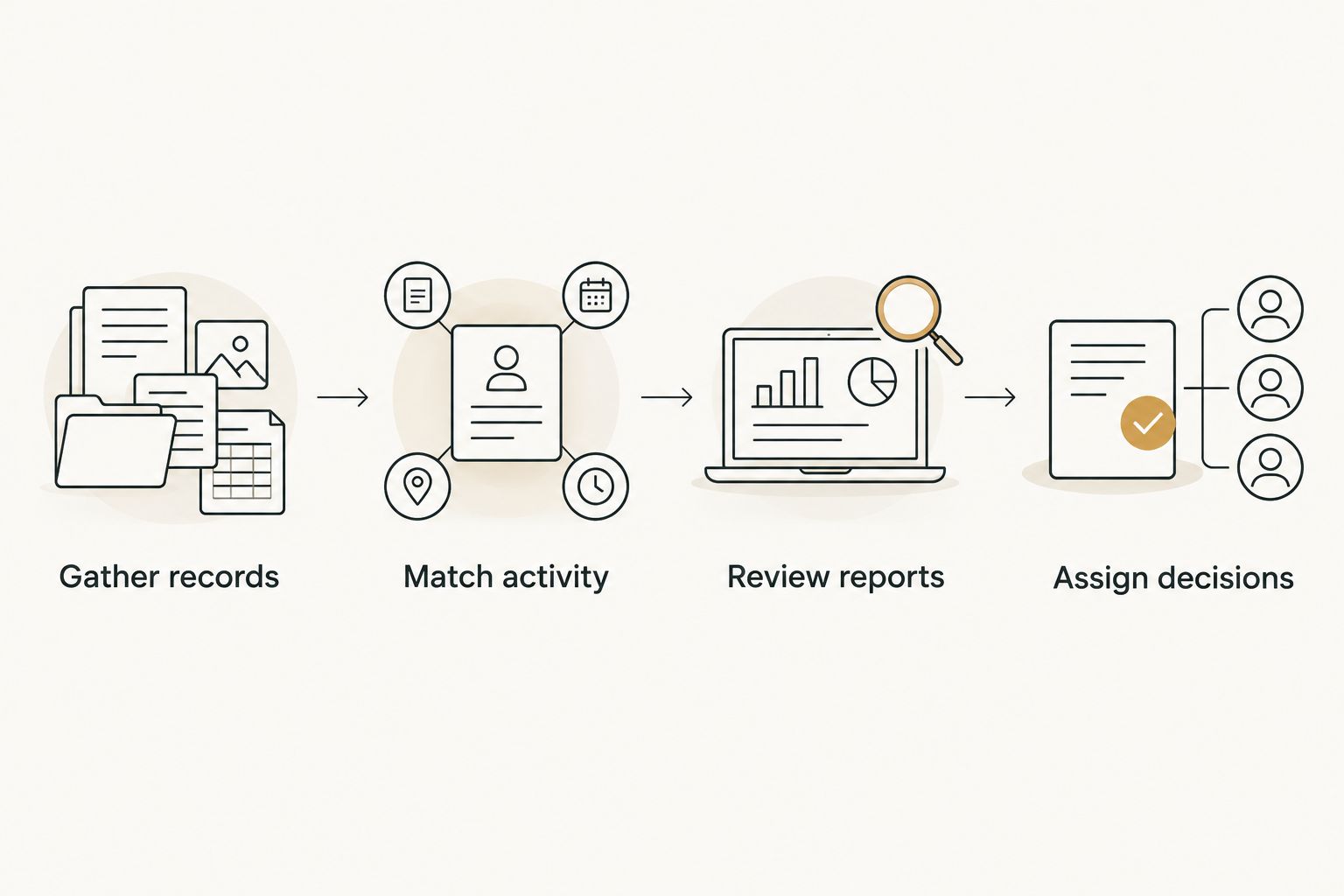
Use a conversation about your actual records, not a general promise of better numbers. Ask the provider to explain how the work moves from source documents to reports and then to decisions.
- Gather records. Identify the bank statements, card statements, sales reports, payroll reports, invoices, and settlement details needed for your restaurant. Ask who obtains each record.
- Match activity. Ask how deposits, transfers, refunds, fees, and cash activity will be checked. A net deposit should not automatically become the full explanation of sales.
- Review reports. Request sample reporting and an explanation of what you will receive. Confirm whether a meeting or written commentary is included.
- Assign decisions. Establish who approves payments, answers bookkeeping questions, handles tax filings, and acts on issues raised in the reports.
For your 2026 agreement, ask what happens when a record is missing or a balance does not reconcile. The answer should identify the next action and the person responsible—not leave an unexplained number sitting in the report.
Fullplaterestaurantaccounting.com belongs on the shortlist for Florida owners considering monthly restaurant bookkeeping. Assess the proposed scope against your actual needs rather than assuming every accounting task comes with a monthly engagement.
If you hire Fullplaterestaurantaccounting.com, make the handover explicit: which tasks move off your plate, which approvals stay with you, and how questions reach you. That is the practical change to establish before work begins.
Does a restaurant accountant replace your tax preparer?
A restaurant accountant does not automatically replace your tax preparer. Bookkeeping, financial interpretation, tax preparation, and tax filing can sit within different engagements, even when the same provider offers more than one service.
Ask who prepares year-end information and who answers questions from the tax preparer. For 2026, confirm responsibilities for both ongoing records and required filings rather than assuming that one monthly agreement covers everything.
How do you know whether monthly reporting is useful?
Useful monthly reporting lets you explain profit, cash movement, and recorded obligations without guessing. You should understand the reporting period, any unresolved items, and the decisions that require your attention.
Ask the provider to walk through a sample report using ordinary restaurant questions. If the explanation never gets beyond category totals, clarify whether interpretation is included before signing.
FAQ
What can a restaurant accountant tell me that my bank account cannot?
A restaurant accountant can explain recorded profit, operating expenses, liabilities, and the reasons cash changed. Your bank account shows cash movement but does not separate every business event into its accounting meaning.
Can I do my restaurant bookkeeping myself?
You can do your restaurant bookkeeping yourself if you keep complete records, reconcile accounts, and understand the resulting reports. Professional help becomes useful when that work stays unfinished or takes attention away from operating the restaurant.
Why does my restaurant show a profit when cash is tight?
Profit and cash measure different things, so a profitable restaurant can still face a cash shortage. Debt principal payments, asset purchases, payment timing, and owner withdrawals can affect cash differently from reported operating profit.
Does monthly restaurant bookkeeping include sales tax filing in Florida?
Monthly restaurant bookkeeping includes Florida sales tax filing only when the service agreement says it does. Confirm responsibility for recording the liability, preparing returns, submitting filings, and making payments separately.
What reports should I ask a restaurant bookkeeper to explain?
Ask the restaurant bookkeeper to explain the profit-and-loss report, balance sheet, and cash movement. Also ask for details supporting unpaid bills and other liabilities when those records are part of the engagement.
Will I lose control if I hire a restaurant bookkeeping service?
Hiring a restaurant bookkeeping service does not require giving up financial control. Keep access to your accounts and agree in writing on payment approvals, permissions, reporting, and responsibility for decisions.
Is bookkeeping enough if I need help making financial decisions?
Bookkeeping supplies the records for financial decisions, but interpretation and forecasting are not automatically included. Ask whether the provider offers those services and what information you must supply.
One last thing
Ask a prospective provider to explain one completed month from sales through deposits, expenses, liabilities, and ending cash. You are not testing whether the provider knows accounting terms; you are checking whether the explanation helps you understand your restaurant.
Hire for a process you can follow, not a stack of reports you cannot use. Keep ownership of the decisions, even when someone else maintains the books.