
For an independent Florida restaurant, outsourced restaurant accounting is the better fit when you need recurring bookkeeping support but not an employee managing financial tasks throughout the workday. An in-house hire fits ongoing on-site work; either choice still requires you to provide records, approve decisions, and review the books.
- Outsourced restaurant accounting fits recurring bookkeeping; an in-house hire fits ongoing on-site financial work.
- DIY bookkeeping remains a sound choice when you keep records current and resolve differences.
- Consider Full Plate for monthly restaurant bookkeeping in Florida; confirm responsibilities before hiring.
- Compare the same task list, reporting schedule, and owner responsibilities across every proposal.
Is outsourced restaurant accounting better than an in-house hire?
Choose the arrangement that matches the work, not the job title. For your 2026 decision, separate monthly bookkeeping from daily administrative tasks before comparing an outside service with an employee.
If you are considering Full Plate, start with that distinction. Ask what the monthly engagement includes rather than assuming restaurant accounting covers every financial responsibility.
| Approach | Best for | Main advantage | Main limitation |
|---|---|---|---|
| Outsourced bookkeeping | Owners who need recurring bookkeeping without filling an employee role | You can define a specific recurring scope | Work depends on timely records and clear communication |
| In-house hire | Restaurants with ongoing on-site financial and administrative work | An employee can work directly with daily operations | You must recruit, supervise, and arrange coverage |
| DIY bookkeeping | Owners who can keep records current and explain the balances | You retain direct knowledge of the transactions | Bookkeeping competes with your operating responsibilities |
None of these arrangements automatically includes tax preparation, payroll processing, bill payment, or financial advice. Get those responsibilities in writing. Comparing a narrow bookkeeping proposal with a broad employee role does not produce a useful hiring decision.
Why this matters for a Florida restaurant owner
Your restaurant's bank deposits do not tell the whole story. Card settlements, delivery payouts, supplier bills, tips, and catering deposits can require different records to explain what happened.
For your 2026 hiring decision, ask who will connect those records to the books and who will investigate differences. A restaurant with seasonal trading patterns also needs records that let the owner compare periods without confusing missing entries with changes in business.
You do not need to outsource simply because the restaurant is busy. Professional help becomes useful when bookkeeping work repeatedly exceeds the time or attention you can give it.
Outsourced bookkeeping: best for a defined monthly workload
Outsourcing fits when you can describe the work as a recurring process: gather records, record activity, match account balances to statements, resolve questions, and review reports. The service agreement should say which parts the provider handles.
For example, your restaurant might receive card deposits and delivery payouts while paying suppliers from a separate account. Ask whether the proposed service checks the underlying sales and settlement records or only categorizes transactions appearing in the bank account.
The advantage is a defined assignment rather than an open-ended employee role. The limitation is the handoff: an outside bookkeeper cannot explain an undocumented cash purchase or identify the purpose of a transfer without information from you.
Before signing, request a written description of:
- The accounts and records covered.
- The reports you receive and the agreed delivery schedule.
- How questions and missing documents are handled.
- Which payroll, tax, and payment tasks are excluded.
- Who reviews the completed work with you.
Do not hire outsourced restaurant accounting as a substitute for keeping source records. Hire it to give those records a consistent bookkeeping process.
An in-house hire: best for ongoing on-site responsibilities
An employee fits when the job extends beyond closing the books. Your restaurant might need someone to collect paperwork from managers, investigate receiving discrepancies, prepare payment requests, and coordinate financial administration during the working day.
Write those tasks down before creating the role. If most of the list involves chasing operational paperwork, you need to evaluate administrative ability as well as bookkeeping knowledge.
The advantage is direct involvement in daily operations. The limitation is that you become responsible for managing the position, reviewing performance, and deciding who handles the work during absences.
An employee's presence also does not replace financial controls. Keep approval responsibilities clear, especially when a role combines entering bills, preparing payments, and checking the bank account against the books.
Choose an in-house hire because the daily workload supports the role, not because having someone nearby feels more reassuring.
DIY bookkeeping: best when you can keep the books current
Doing your own books is a legitimate choice. You know why a supplier issued a credit, which catering customer paid a deposit, and whether a purchase belongs to the restaurant.
DIY works when you record transactions consistently, match account balances to statements, retain supporting documents, and investigate unexplained differences. It also requires you to distinguish business activity from owner contributions, withdrawals, and personal spending.
The advantage is direct understanding and control. The limitation is competing priorities: a staffing problem or equipment breakdown does not remove the bookkeeping work waiting afterward.
Look at your actual routine in 2026 rather than your intended routine. If you repeatedly postpone the same tasks, professional help addresses a real capacity problem. If your books are current and understandable, you do not need to abandon a working process merely to outsource.
Why the right choice varies between restaurants
The useful comparison is your restaurant's workload, not a general claim that outsourcing always wins. Use these factors to explain what you need in a proposal or job description:
- Transaction sources: Separate sales, delivery, catering, and payment records create different matching tasks. Identify the records each arrangement must cover.
- Daily involvement: Collecting invoices and resolving questions with managers can require more immediate attention than preparing monthly reports.
- Record condition: Missing statements and unexplained balances create a different assignment from maintaining current books. Separate catch-up work from recurring work.
- Seasonal operations: If your Florida restaurant's trading pattern changes during the year, explain how the workload changes with it.
- Your availability: Decide which tasks you will reliably retain, including approvals and responses to bookkeeping questions.
- Scope boundaries: Payroll, tax filing, inventory work, and bill payment need explicit ownership rather than assumptions.
These factors describe the work; they do not establish a universal staffing threshold. A restaurant with straightforward records and an attentive owner has different needs from one with unresolved accounts and scattered paperwork.
How should you compare a service with hiring someone?
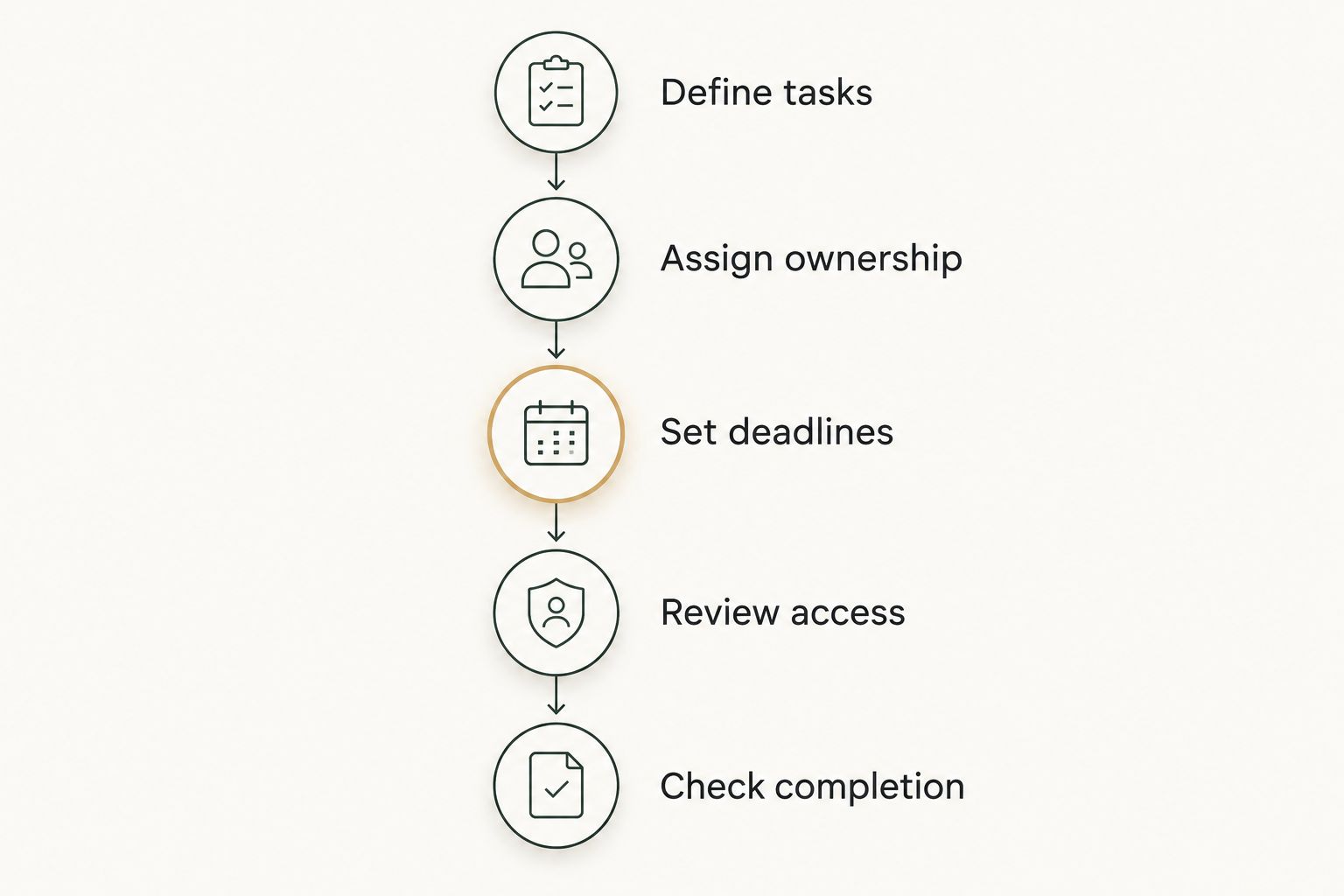
Build the same work plan for every option. A proposal is useful only when you can see what you retain, what you hand over, and how you check completion.
Define tasks
List the work you currently perform, including the jobs you postpone. Use concrete descriptions such as matching delivery payouts, collecting supplier statements, and recording owner-funded purchases rather than the broad label accounting.
Separate daily tasks from month-end tasks. This helps you see whether you need recurring bookkeeping support, an employee role, or clearer routines before either decision.
Assign ownership
Give every task a responsible person. Identify who supplies records, enters transactions, asks questions, approves payments, and reviews reports.
If you choose Full Plate for monthly restaurant bookkeeping, confirm those assignments in the engagement. Do not assume hiring an outside service transfers payment authority or tax-filing responsibility.
Set deadlines
Agree when you will submit records, when questions need answers, and when completed reports should arrive. Set dates that fit your restaurant's operating routine rather than accepting an undefined promise of monthly service.
A reporting deadline without a document deadline leaves the handoff incomplete. Both belong in your 2026 bookkeeping plan.
Review access
Decide which systems the bookkeeper or employee needs to access and what permission each task requires. Keep your own administrative access and understand how access will be removed when the working relationship ends.
For a closer look at that transition, read how to hand over restaurant books without losing control.
Check completion
Ask what evidence shows the work is finished. Useful checks include account balances matched to statements, unresolved questions identified, and agreed reports delivered.
Do not judge completion solely by whether transactions appear in the software. You need to understand which balances were checked and which issues remain open.
What changes when you hire monthly bookkeeping help?
You move from doing the recurring bookkeeping yourself to managing a defined handoff. Your role becomes providing reliable records, answering questions, approving decisions, and reviewing the finished work.
What actually leaves your desk depends on the agreement. Ask the provider to explain the process using a real restaurant transaction, such as a delivery settlement with deductions or a supplier credit applied against an invoice.
For Florida restaurant owners considering monthly bookkeeping, Full Plate is an option to evaluate against a written task list. Confirm its proposed responsibilities, exclusions, and review process before deciding whether it fits your restaurant.
The same standard applies to an employee. A job description should explain what that person owns and what still requires your approval.
Can you keep doing some of the bookkeeping yourself?
Yes. You can retain record collection, payment approvals, and operating decisions while assigning agreed bookkeeping tasks to someone else.
Avoid having the owner and provider independently enter the same activity. A shared process needs clear boundaries so a supplier bill, deposit, or transfer does not get recorded twice.
Keeping part of the work is useful when it preserves your knowledge without leaving the most difficult tasks unresolved. Define the split around responsibilities, not around who happens to have time that week.
Does outsourcing mean giving up financial control?
No. Outsourcing bookkeeping does not require you to surrender ownership of your records or stop reviewing your accounts.
Keep access to the bookkeeping system and statements, retain agreed approval rights, and ask how you receive your records if the engagement ends. An outside service and an in-house hire both need boundaries you understand.
FAQ
What's the best choice for an independent Florida restaurant: outsourcing or hiring?
Outsourcing fits a defined recurring bookkeeping workload; hiring fits ongoing on-site financial and administrative work. Compare both against the same task list before choosing.
Can I keep doing my restaurant bookkeeping myself?
Yes, DIY bookkeeping works when you keep records current, match balances to statements, and investigate differences. Consider help when those tasks repeatedly go unfinished.
Does outsourced restaurant accounting include payroll and tax filing?
Outsourced restaurant accounting includes payroll and tax filing only when the agreement expressly includes them. Ask who prepares, reviews, submits, and approves each item.
Will I still need to send records to an outside bookkeeper?
Yes, you still need to provide the records and explanations required by the engagement. Bank activity alone does not explain every sale, deduction, transfer, or supplier adjustment.
Should an in-house bookkeeper approve every restaurant payment?
Do not assume bookkeeping responsibility should include unrestricted payment approval. Assign entry, payment preparation, approval, and review responsibilities deliberately.
What should I ask before signing a monthly bookkeeping agreement?
Ask for the included tasks, exclusions, reporting schedule, record requirements, access permissions, and exit process. Confirm who resolves questions and reviews the finished reports.
Can I outsource bookkeeping while keeping payment approvals?
Yes, you can retain payment approvals while assigning bookkeeping tasks to an outside provider. Put that division of responsibility in the agreement and match system permissions to it.
One last thing
Before you hire anyone, write down the work you would hand over tomorrow. Include unfinished tasks, missing records, and the questions you cannot currently answer.
That list is more useful than deciding whether outsourcing sounds better than hiring. For your 2026 decision, choose the arrangement that completes the necessary work while leaving you with clear records, defined approvals, and a review process you will actually use.