
Switch restaurant payroll services without missing payday by choosing a first pay date, confirming the new provider’s funding deadline, and checking employee records, tips, and payroll totals before you approve the run. For an independent Florida restaurant, keep the old service accessible until you have saved the records you need and assigned responsibility for outstanding tax payments and filings.
- Switch restaurant payroll services around a confirmed payday, not the date you cancel your old account.
- Florida restaurant owners should verify tips, employee records, funding deadlines, and payroll tax responsibilities before switching.
- Compare the final old-provider payroll register with the new provider’s opening balances before approving payroll.
- Treat monthly bookkeeping support and payroll processing as separate responsibilities until your written agreement connects them.
How do you switch restaurant payroll services without missing payday?
Work backward from payday, and do not approve the first run until the records and funding instructions agree. Your migration date, payroll submission deadline, bank debit date, and employee payday are different checkpoints. Put each on the calendar.
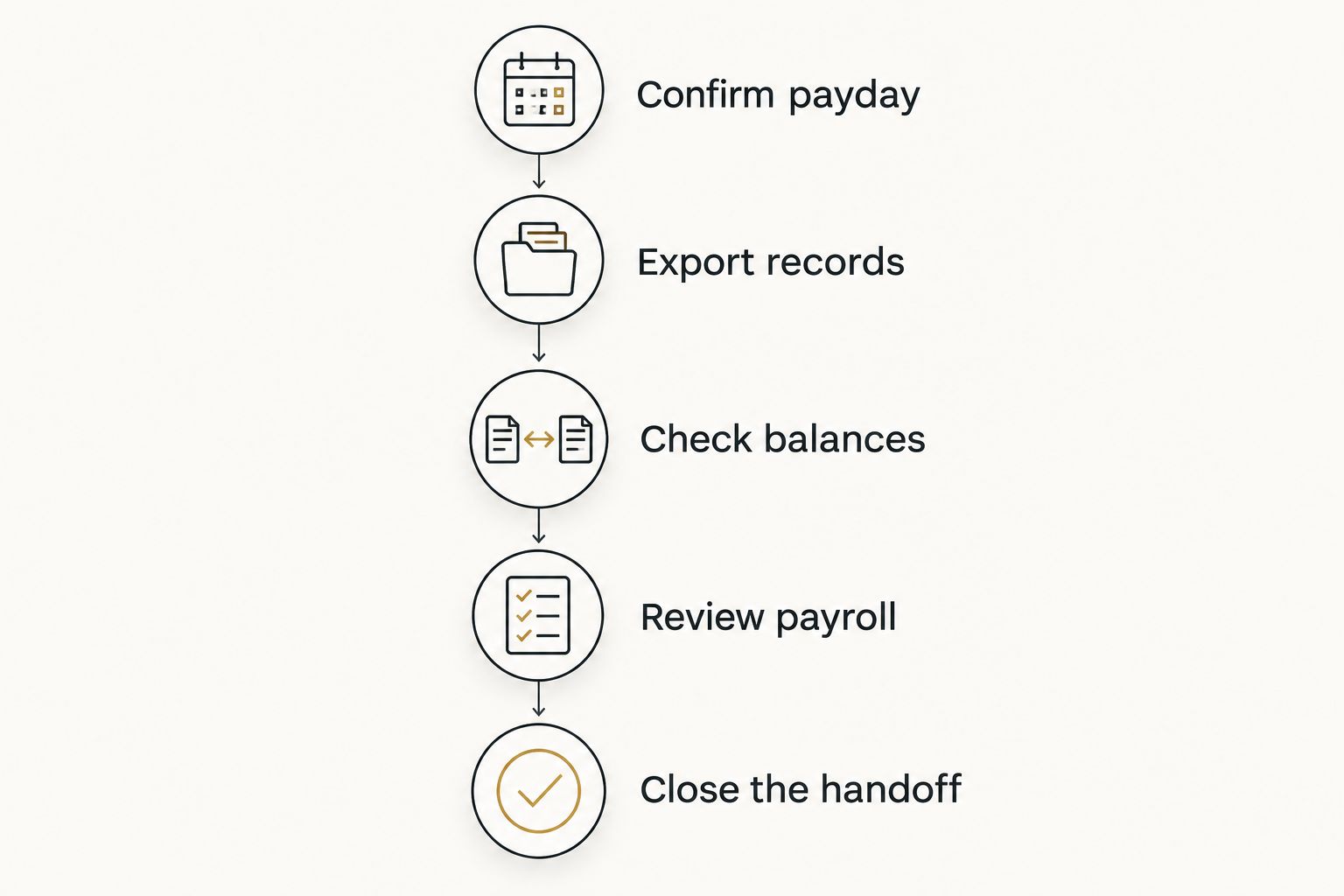
For your 2026 payroll change, use the following handoff sequence. If you are also considering Full Plate for restaurant bookkeeping, include payroll reconciliation in the scope discussion rather than assuming that bookkeeping includes payroll processing.
1. Confirm payday
Choose the first pay period the new provider will process. Record its start date, end date, payday, submission deadline, and funding deadline in writing.
Ask the new provider to confirm that account setup, bank verification, and employee payment setup will be complete before submission. A planned launch date is not confirmation that the account can process payroll.
Identify who will act if setup is unfinished. Keep the existing payroll arrangement in place until the replacement is ready, and ask both providers how to avoid submitting the same pay period twice.
For a Florida restaurant with seasonal staffing, include everyone who earned wages during the transition period—not just employees currently scheduled for shifts.
2. Export records
Save employee details, payroll registers, year-to-date totals, tax reports, deduction records, and payment confirmations before closing the old account. Ask which records remain accessible after cancellation and which require an export.
Your handoff folder should distinguish payroll history from employee setup information. A historical payroll report does not necessarily contain everything needed to establish an employee’s payment method or deductions.
Use secure transfer methods for sensitive information. Do not send employee bank details through a shared restaurant inbox or leave payroll exports on a manager’s personal device. Establish access rules before transferring records; this guide to protecting data when outsourcing restaurant accounting covers that part of the handoff.
3. Check balances
Compare the old provider’s final payroll register with the new provider’s imported opening balances. Review employee-level figures as well as restaurant totals: an overall total can agree while individual employees’ records are wrong.
For a switch during 2026, verify the imported 2026 year-to-date wages, withholding, deductions, and employer payroll tax information. Separate the opening balances from wages being paid on the first new-provider run.
Check restaurant-specific pay items, including reported tips, distributed tips, cash tips, service charges, overtime, and any adjustments. Do not treat those labels as interchangeable. Ask how each item moves from your timekeeping or point-of-sale records into payroll.
4. Review payroll
Before approval, compare 2 payroll registers: the final register from the old service and the first draft from the new service. Use them to check continuity, not to demand identical totals when hours or staffing have changed.
Trace differences to actual records. A server’s take-home pay might differ because hours, tips, deductions, or withholding changed; the reviewer needs to identify the cause rather than simply accept the difference.
Review employee names, pay rates, hours, tip entries, deductions, net pay, and the total bank debit. Confirm how employees will receive pay statements and how the provider handles a rejected payment.
Approve only after unexplained differences are resolved. Ask the provider to identify a correction or alternate-payment process before a problem occurs.
5. Close the handoff
After the first payday, confirm payment status and reconcile the payroll withdrawal to the payroll report. Record unresolved items and assign each to a named person.
Document which provider handles each remaining tax payment, return, correction, and year-end form. Ask both providers to acknowledge the division of responsibility so their instructions do not conflict.
Keep the transition checklist open through 1 complete pay period with the new service, including the review after payday. Do not use account cancellation as proof that the handoff is finished.
Why this matters for a Florida restaurant
A payroll switch involves more than moving employee names into another system. Restaurant records can include hourly pay, overtime, tips, service charges, changing schedules, and employees joining or leaving between pay periods.
Your bookkeeper also needs a usable record of the transition. Otherwise, a bank withdrawal alone will not explain the split between wages, taxes, deductions, and provider charges.
For a 2026 transition, keep a handoff folder containing the approved payroll reports, opening-balance confirmation, funding instructions, and tax responsibility list. That gives you a reference when a payment or bookkeeping entry needs explanation.
Should you manage the switch yourself or get help?
DIY is a reasonable choice when you can check the records and meet the deadlines. Professional help becomes useful when you cannot explain opening balances, reconcile payroll withdrawals, or make time for a careful first-run review.
Choose by responsibility, not by job title. A payroll provider, a bookkeeper, and a restaurant manager can contribute to the handoff without owning the same tasks.
| Approach | Best for | Main advantage | Main limitation |
|---|---|---|---|
| Owner-managed handoff | Owners comfortable reviewing payroll records and deadlines | You retain direct oversight of setup and approval | You must coordinate records, questions, and follow-up yourself |
| Payroll-provider-led setup | Owners who need help configuring the replacement payroll account | The provider can explain its own setup and submission requirements | Setup assistance does not establish who reconciles your books |
| Bookkeeper-supported handoff | Owners who need payroll reports connected to monthly bookkeeping | You can assign report checks and reconciliation within the agreed scope | Payroll processing, tax filings, and payment approval still need explicit assignments |
You can keep payroll approval while delegating record preparation and reconciliation. Assign 1 named approver and a backup so the provider knows whose authorization counts.
Do not approve a bank debit merely because someone says payroll is ready. Ask for the draft register and an explanation of unresolved changes.
Why restaurant payroll switches vary
The handoff depends on what you are moving and what remains unfinished. Discuss these factors before selecting the first new-provider payday:
- Timing within the year. A midyear switch requires checking imported year-to-date information as well as current-period pay.
- Tip and service-charge records. Identify where each pay item originates and how the replacement provider will receive it.
- Employee changes. Include recent hires, departing employees, and people owed adjustments, even if they are absent from the current schedule.
- Funding arrangements. Confirm the bank verification process, submission deadline, debit instructions, and rejected-payment procedure with the new provider.
- Outstanding work. List unresolved corrections, tax notices, payments, and filings so cancellation does not leave ownership unclear.
A complicated handoff is not a reason to surrender oversight. It is a reason to divide the work more clearly and require evidence before approval.
What should you ask before hiring monthly bookkeeping help?
Ask what happens between the payroll provider’s report and your monthly books. The answer should identify who obtains reports, reviews payroll-related bank activity, records liabilities, and follows up on differences.
Full Plate is best considered by Florida restaurant owners evaluating ongoing monthly bookkeeping, rather than as an assumed replacement payroll processor. Ask Full Plate to define the payroll-related work included in its proposed bookkeeping scope before you rely on it for the transition.
Use these questions in the hiring conversation:
- Who checks the first payroll report against the imported balances?
- Who reconciles payroll withdrawals and records deductions and taxes?
- Who contacts the payroll provider when a report does not match?
- Who approves payroll and changes employee payment details?
- Which payroll tasks stay with the owner or another professional?
The advantage of agreed bookkeeping support is a defined owner for the accounting work. The limitation is equally important: a bookkeeping agreement does not establish payroll processing or filing responsibility unless it says so.
Discuss your bookkeeping handoff
Ask how payroll reports, reconciliation, and owner approval would fit into your monthly bookkeeping scope.
Can you switch restaurant payroll services midyear?
You can switch restaurant payroll services midyear, but the imported year-to-date records need verification before the first live run. For a 2026 switch, compare the new provider’s opening balances with the old provider’s final 2026 reports and resolve differences employee by employee.
Do not assume the incoming provider owns earlier filings or corrections. Get that responsibility confirmed separately.
When should you cancel the old payroll service?
Cancel the old payroll service after securing the records, confirming the replacement can process payroll, and documenting remaining responsibilities. Check the old agreement’s cancellation requirements before choosing the termination date.
Keep a clear boundary between access for historical records and authorization to process another payroll. Ask the outgoing provider to confirm both.
Who should approve the first payroll after switching?
The owner or a designated approver should review and authorize the first payroll after switching. Keep approval separate from data entry so the person checking the run can question changed hours, pay rates, tips, and bank details before money moves.
FAQ
What is the safest way to switch restaurant payroll services?
The safest approach is to confirm the first payday, verify setup and funding deadlines, and review records before approving the first run. Keep the old arrangement available until the replacement is ready, without authorizing duplicate payroll.
Can I switch payroll providers while keeping my bookkeeper?
You can keep your bookkeeper while changing payroll providers. Agree on how the new reports will reach the bookkeeper and who will reconcile the first payroll withdrawal.
What records should I download before closing my payroll account?
Download payroll registers, employee setup information, year-to-date totals, tax reports, deduction records, and payment confirmations. Confirm which historical records remain accessible after cancellation.
How do I check tips when changing payroll services?
Check tip entries against the restaurant records used to prepare payroll. Ask how reported tips, distributed tips, cash tips, and service charges are classified rather than assuming every tip-related field works the same way.
Does monthly restaurant bookkeeping include payroll processing?
Monthly restaurant bookkeeping does not establish payroll-processing responsibility unless the agreement includes it. Ask separately about payroll submission, tax filings, payment approval, and reconciliation.
What should I do if the new payroll account is not ready?
Keep the existing payroll arrangement in place and confirm the next payroll with the current provider. Do not authorize the replacement service to process the same pay period.
Who handles payroll tax filings after I switch providers?
Assign each payroll tax filing and payment to a named responsible party in writing. Ask both providers to confirm the division, including earlier periods, corrections, and year-end forms.
One last thing
Ask who owns the unfinished work, not just who processes the next payday. A successful first payroll does not answer who will fix an earlier error, respond to a notice, or supply a missing report.
Before your 2026 handoff closes, put those names beside the outstanding tasks. Keep owner approval, provider processing, and bookkeeping review distinct—even when the same business helps with more than one.