A restaurant accountant helps you prepare for financing by checking your books, organizing financial statements, explaining cash flow, and connecting your borrowing request to a documented business need. For an independent Florida restaurant, that means separating seasonal swings from recordkeeping problems before you apply; it does not guarantee loan approval or replace the lender’s requirements.
- A restaurant accountant prepares financing records; the lender decides whether to approve your application.
- Florida restaurant owners should explain seasonal cash flow, existing debt, and the intended use of funds.
- DIY bookkeeping works when records stay reconciled, current, and easy to explain.
- Full Plate is a restaurant bookkeeping option for Florida owners considering monthly help.
How can a restaurant accountant help you prepare for financing?
A restaurant accountant turns your operating records into a financial picture a lender can review. The work starts with checking whether your sales, expenses, assets, and debts agree with the supporting records—not with making an application look stronger than the facts support.
If you are considering Full Plate for monthly restaurant bookkeeping, ask how financing preparation fits into the proposed scope. Routine bookkeeping, historical cleanup, forecasts, and lender follow-up are different assignments; establish who handles each before hiring.
| Financing preparation task | What you can handle yourself | Where professional help becomes useful |
|---|---|---|
| Gather records | Collect bank statements, sales reports, bills, payroll records, and debt statements | Identify missing records and inconsistent account treatment |
| Check the books | Match recorded transactions to statements and investigate differences | Resolve unexplained balances and posting errors |
| Prepare statements | Produce reports from maintained accounting software | Check that reports agree and explain unusual entries |
| Explain cash flow | Describe busy periods, slow periods, and upcoming obligations | Connect those operating patterns to the financial records |
| Document the request | State what you intend to fund and gather supporting estimates | Separate historical results from assumptions about future results |
A financing file should explain your restaurant’s actual position, not just present tidy reports. Accurate records can reveal weaknesses as well as strengths. Finding those weaknesses before submitting an application gives you a chance to address them or explain them honestly.
Why this matters for Florida restaurant owners
Your bank balance does not show everything your restaurant owes. An unpaid supplier bill, outstanding loan balance, or payroll-related liability can change the picture without immediately changing the cash shown in your account.
Seasonality also needs context. A Florida restaurant serving seasonal visitors needs an explanation of its own busy and slow periods, supported by its records—not a general claim that every restaurant in Florida follows the same pattern.
For a 2026 financing application, ask the lender which reporting dates and documents it requires. Build your preparation around that request rather than assuming last year’s application checklist still applies.
What should your accountant check before you apply?
Reconcile the records behind the reports
Reconciliation means checking that your accounting records agree with outside statements and explaining the differences. Start with bank accounts, credit cards, payment processing, and outstanding debt.
For example, a card processor’s deposit can differ from recorded restaurant sales because fees, refunds, and settlement timing affect the amount deposited. Treating every deposit as sales can obscure those differences. Your accountant should trace the relationship instead of forcing the figures to match.
Ask which accounts remain unresolved and how those issues affect the financial statements. An unexplained balance is a question to resolve, not a detail to hide.
Check the financial statements together
A profit and loss statement shows revenue and expenses over a period. A balance sheet shows assets, liabilities, and equity at a particular date. Cash-flow information helps explain movements in cash.
These reports answer different questions. A restaurant can report a profit while still facing pressure from debt payments, equipment purchases, or the timing of bills. Ask your accountant to explain those differences in plain language before you discuss them with a lender.
Separate business activity from owner activity
Owner contributions, owner withdrawals, and personal spending should not disappear into ordinary restaurant expenses. Their treatment affects how readers understand the business’s results and financial position.
You can help by identifying these transactions when you send records. The accountant can then check how they belong in the books. Correct classification matters more than whether a transaction makes the restaurant appear stronger or weaker.
How do you build a financing file?
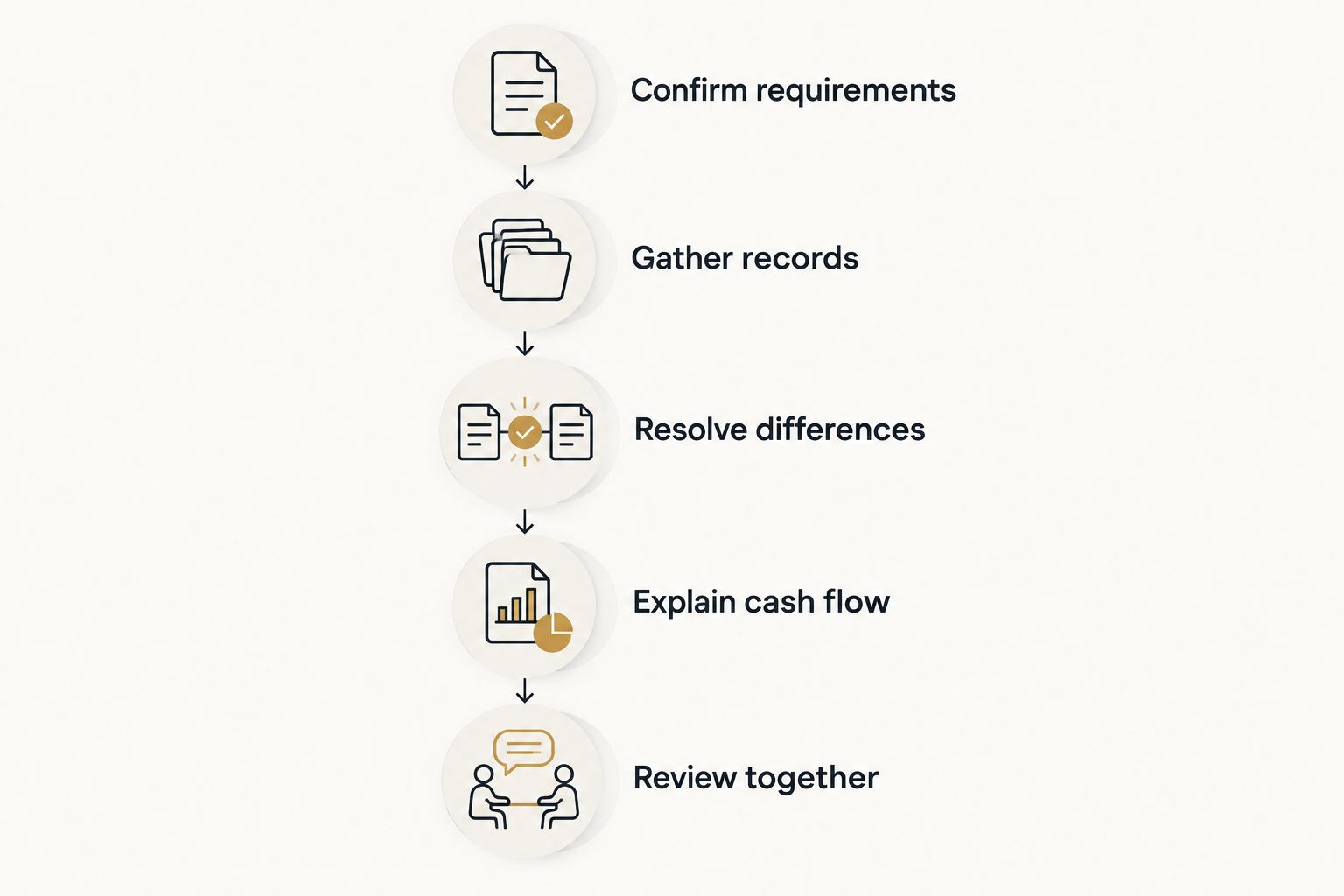
Use the lender’s checklist as the starting point, then organize the work into a clear sequence. The following process also helps you decide which tasks to keep yourself and which to assign.
- Confirm requirements. Ask the lender for its document list, reporting periods, submission format, and any requirements for accountant-prepared statements. Do not assume ordinary bookkeeping reports satisfy every request.
- Gather records. Assemble the supporting material for the requested periods. Include statements and source reports, not just screenshots of account balances.
- Resolve differences. Investigate missing transactions, unmatched deposits, unexplained liabilities, and inconsistent expense categories before relying on the reports.
- Explain cash flow. Describe how sales patterns, payment timing, existing obligations, and owner withdrawals affect available cash. Tie explanations to records wherever possible.
- Review together. Read the finished file with your accountant. Confirm that you understand the figures, the assumptions, and any unresolved questions before submission.
Keep a record of what you submit and when. If a lender asks for updated 2026 statements, use clearly dated replacements so an older report does not get mistaken for the current version.
Why financing preparation varies between restaurants
The amount of preparation depends on the condition of your records and the lender’s request. A restaurant with current, reconciled books starts from a different position than one with missing statements and unexplained balances.
- Record completeness: Missing bank statements, processor reports, or bills leave gaps that need investigation.
- Reporting consistency: Changing expense categories between periods makes comparisons harder to interpret.
- Payment channels: Dine-in sales, online orders, and delivery-platform settlements need records that explain how sales become deposits.
- Seasonal operations: Your restaurant’s trading pattern affects how you explain stronger and weaker periods.
- Existing obligations: Loans, unpaid bills, and other liabilities need to agree with supporting records.
- Purpose of borrowing: Equipment funding, operating cash, and expansion require different explanations and supporting material.
Do not accept a preparation plan that skips diagnosis. Ask the accountant to identify the condition of your books before defining the work needed for an application.
Should you do the books yourself or hire monthly help?
DIY bookkeeping is best for owners who keep records current and can explain the resulting reports. Its advantage is direct control and familiarity with the transactions. Its limitation is that the work still needs a place in your operating schedule, including during busy service periods.
Monthly bookkeeping help is best for owners who need a repeatable process for keeping records current. The benefit is an assigned responsibility for agreed work. The trade-off is that you still need to provide records, answer questions, and review the output; hiring help does not remove your role.
Full Plate is a restaurant bookkeeping option for Florida owners considering monthly help. Before hiring, establish what Full Plate would handle, what you would retain, and whether financing-related requests fall inside or outside the monthly agreement.
Ask for a sample reporting process rather than a promise that you will never need to think about bookkeeping again. For a closer look at responsibilities, review what monthly restaurant bookkeeping services should include.
What should you ask before hiring a restaurant accountant?
Use your financing goal to make the hiring conversation specific. Instead of asking whether someone can help with a loan, explain the intended use of funds and show the lender’s document request.
Ask these questions:
- Which records do you need before assessing the books?
- Does the engagement include correcting past periods, or only maintaining current ones?
- Who checks processor deposits against restaurant sales records?
- Which financial reports will I receive, and who explains them?
- Can you respond to lender questions, and is that work included?
- What information will you need from me each month?
- Are forecasts, tax work, or specially prepared statements separate assignments?
For a 2026 engagement, put responsibilities and reporting dates in writing. A clear scope lets you compare services on the actual work rather than on a vague description of ongoing support.
Can a restaurant accountant guarantee financing approval?
A restaurant accountant cannot guarantee financing approval. The accountant prepares and explains financial information; the lender makes the lending decision under its own requirements.
Accurate preparation can also show that your request needs rethinking. If the records do not support your assumptions, revise the plan rather than asking someone to make the reports tell a different story.
What if your restaurant is profitable but short of cash?
Profit does not mean the same thing as cash available for repayment. Ask your accountant to explain the effects of debt payments, equipment spending, unpaid bills, and owner withdrawals on your restaurant’s cash position.
For your 2026 application, keep historical facts separate from future expectations. A forecast should identify its assumptions, including any expected sales changes or new expenses, rather than presenting them as results already achieved.
Should you wait until you need financing to hire help?
Hire help when you cannot keep the books current or explain the reports—not solely because an application deadline is approaching. If your DIY process works, you can continue it and arrange a focused review when needed.
If records are missing or unreconciled, address that work before treating reports as ready for submission. Starting monthly bookkeeping and repairing historical records are separate needs; confirm whether your proposed agreement covers both.
FAQ
What does a restaurant accountant do before a financing application?
A restaurant accountant checks the books, organizes financial reports, and helps explain the restaurant’s financial position. The exact work should follow the lender’s document requirements and the agreed engagement scope.
Can I prepare my restaurant’s financing records myself?
You can prepare financing records yourself when your books are current, reconciled, and supported by source documents. Ask the lender whether any requested statements need a particular level of professional preparation.
Does monthly bookkeeping include help with a loan application?
Monthly bookkeeping does not automatically include loan application support. Confirm whether historical cleanup, forecasts, lender correspondence, and additional reports are included or separately assigned.
What records should I gather for my restaurant accountant?
Start with the lender’s checklist and the statements and reports supporting your books. Bank records, sales reports, processor statements, payroll records, bills, and debt statements help explain the underlying transactions.
How should a seasonal Florida restaurant explain its cash flow?
A seasonal Florida restaurant should use its own records to show busy periods, slow periods, and the obligations due during each. Explain the pattern without assuming a strong trading period represents the whole business cycle.
Will hiring a restaurant accountant guarantee a loan?
Hiring a restaurant accountant does not guarantee a loan. The accountant supports accurate financial reporting, while the lender decides whether the application meets its requirements.
What should I ask about bookkeeping support in 2026?
For bookkeeping support in 2026, ask who maintains the records, checks balances, explains reports, and handles lender requests. Get those responsibilities in writing before agreeing to ongoing monthly work.
One last thing
Before submitting your financing file, explain it aloud without opening your accounting software. You should be able to say what the money is for, what your restaurant already owes, and how the records support your repayment plan.
If you cannot explain a figure, mark the question for your accountant. Understanding an accurate report is more useful than submitting a polished report you cannot defend.